Putin Seeking Support: Expert Reveals Why Russia's Regime Is Weakened.

Current Situation in Ukraine and Russia
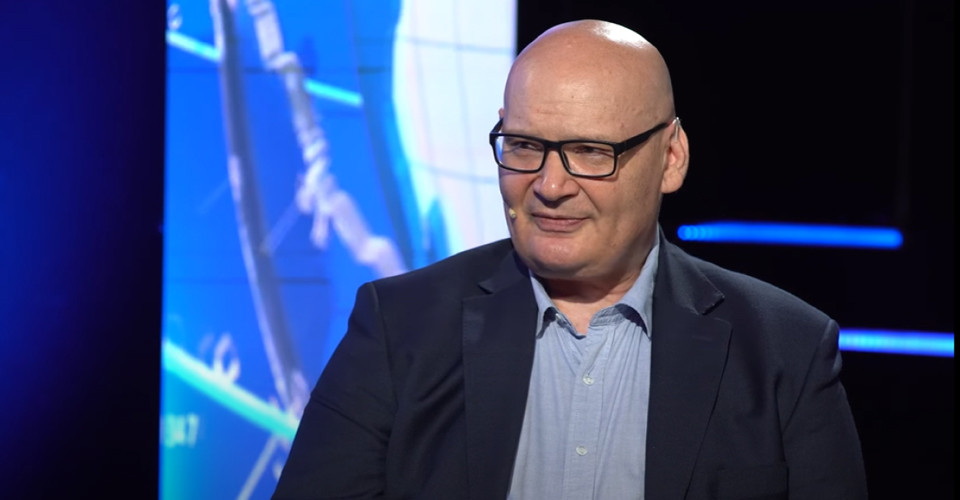
According to Espreso.tv: In a recent interview, Polish political expert Piotr Kulpa analyzed the ongoing dynamics between Ukraine and Russia. He stated that Vladimir Putin's regime is in a weakened state and actively searching for assistance. Kulpa emphasized that drones have become a critical component of Ukraine's military strategy, and he also highlighted the potential for renewed negotiations between the United States and Russia.
Kulpa, a former member of the Polish government and ex-secretary of Poland's delegation to the NATO Parliamentary Assembly, pointed out that in modern warfare, the FP-1 drone manufactured by Fire Point has a range of up to 3,000 kilometers and costs between 40,000 and 50,000 euros. This drone gives Ukraine a significant advantage due to its extended reach. Another model, the FP-2, priced at 40,000 euros, has a 500-kilometer range, can carry 200 kilograms, and strike targets with precision within 1 to 2 meters. Given that Ukraine's border with Russia stretches 2,200 kilometers and its border with Belarus is 1,080 kilometers, such technologies are particularly impactful.
Sense of Instability in Russia
Kulpa further remarked that
“Putin is now a beggar. The ground is burning beneath him.”This statement underscores the instability and pressure facing the Russian president. The expert noted that 'Ukraine's economy is not a determining factor for success in the war,' suggesting that other, more crucial elements are shaping the conflict's trajectory. He also pointed out that 'the reality of the battlefield is that the fight is actually taking place on Russian territory,' indicating a shift of military operations deeper into Russia.
Kulpa also highlighted that Ukrainian President Volodymyr Zelenskyy is working to 'pull Belarus and its regime out from under Moscow's control.' These efforts could alter the conflict's dynamics and influence future negotiations. Russia appears to be returning to earlier negotiation frameworks known as the '28 points,' which may signal a readiness for dialogue amid mounting pressure.
Overall, Piotr Kulpa's analysis reveals the complexity and multifaceted nature of the Ukraine-Russia conflict, where new technologies, economic factors, and political maneuvers play decisive roles in shaping events. With increasing pressure on Russia and the possibility of talks, both the frontline situation and diplomatic landscape may shift, warranting close attention from the international community.
Read also
- Zelensky and Top Military Command Outline Response Plan to Russian Strikes
- EU Adopts 21st Sanctions Package Against Russia: What the New Restrictions Target
- Deadly Strikes Hit Kyiv Region and Sloviansk: 11 Killed, Dozens Wounded
- Ukrainian Forces Strike Kirov’s Avitek Plant: Key Military Components Under Sanctions
- A Vatican Meeting Shifted Zelenskyy’s Relationship With Trump: What Happened at St. Peter’s Basilica
- Zelensky Warns of Black Sea Grain Corridor Blockade as Ukraine Calls UN Security Council Meeting