Investigation Reveals Five New Drone Bases Near Belarus as Russia Expands UAV Operations.

Rising Drone Activity in Border Regions Raises Alarms
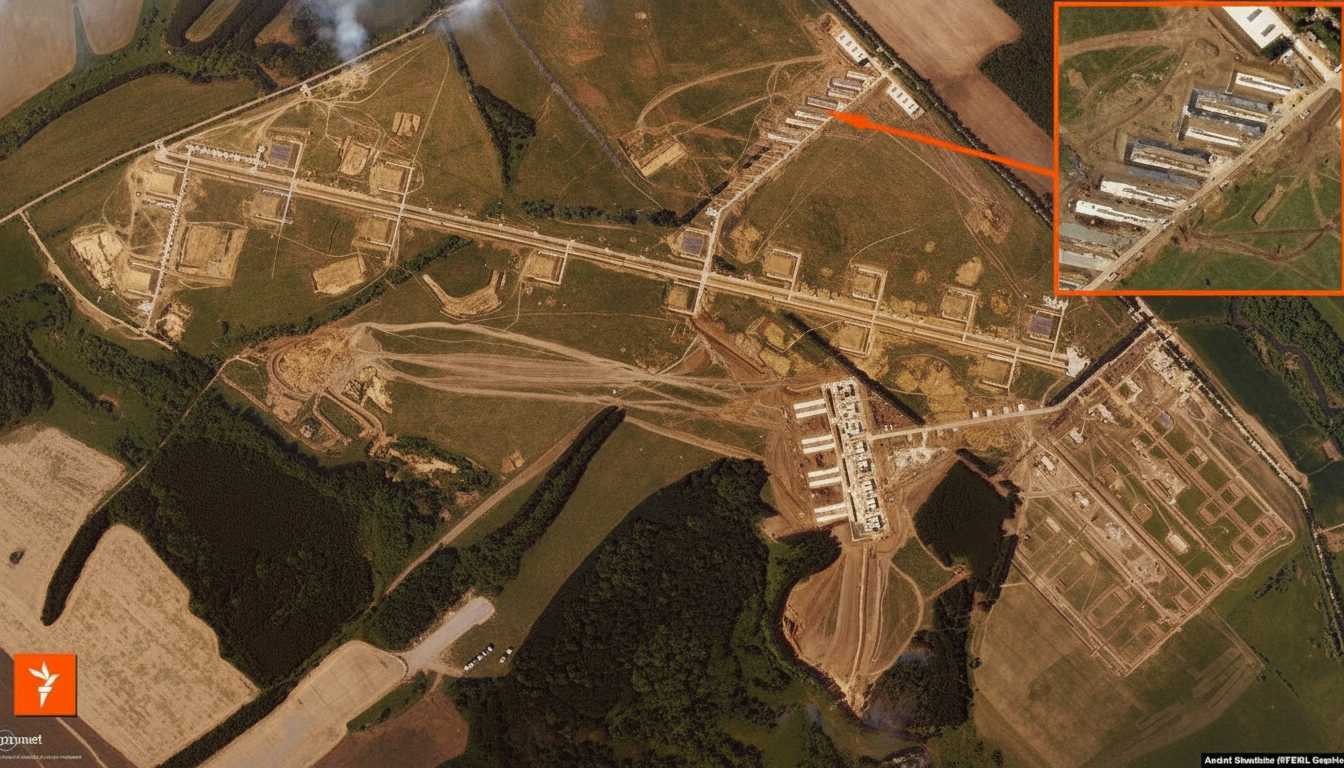
According to Espreso.tv: An investigation by the Belarusian service of Radio Free Europe/Radio Liberty has uncovered at least five facilities in Russia's Bryansk, Oryol, and Smolensk regions that are linked to drone operations. Most of these sites either appeared or expanded starting in the summer of 2024, signaling a significant uptick in unmanned aerial vehicle (UAV) activity in the area. Official records confirm a surge in airspace violations, with over 1,400 incidents recorded in 2025 alone. This development comes amid heightened tensions along NATO’s eastern flank, where drone incursions have become a recurring security challenge.
Identified Facilities
The identified sites include:
- Shatalovo airfield in the Smolensk region, located just 46 kilometers from the Belarusian border. Construction there began in early 2025.
- A complex near Tsimbulovo in the Oryol region, which has doubled in size to nearly 2 by 4 kilometers.
- A facility near Navlya in the Bryansk region, built in the summer of 2024.
- Seshcha airfield, also in the Bryansk region, which served as a key launch site for Shahed drones in 2022–2023.
- A complex near Asovitsa in the Bryansk region, which appeared in the summer of 2025 and sits just 35 kilometers from the Ukrainian border.
According to security forces, drones began entering the airspace almost daily in 2026. In response, approximately 520 drones have been neutralized, with one-third classified as combat drones. Experts view the drone situation in the region as deeply concerning. Yuriy Ihnat noted that
“most Russian drones during mass attacks fly directly through Belarus—and such cases are becoming more frequent.”
Anatoliy Khrapchynskyi emphasized that 'Russia is preparing not to reduce, but to expand its use of the Belarusian corridor.' Notably, on June 10, Poland closed its airspace near Ukraine and Belarus for three months—a decision likely tied to escalating drone-related threats. Ihnat also remarked that
“it is certainly not our job to fight the Belarusians,”underscoring the regional complexity and the need for fresh security approaches.
The rise in drone activity along Russia’s border regions may reflect strategic shifts in military tactics employed by both Russia and Belarus. Given expert concerns and the growing number of airspace violations, these findings point to a potential intensification of military threats in the area. Poland’s airspace closure further highlights these dangers and underscores the importance of international security coordination.
Read also
- A $17,900 Scheme Exposed: Cars Smuggled as Humanitarian Aid Then Sold Illegally
- Cocaine Trafficking Routes to Russia Exposed: Investigation Ties Smuggling to Putin’s Inner Circle
- Serial Numbers of Russian Missile and Drone Parts Handed Over by Ukraine to Allies
- Property Fraud Ring Busted in Odesa: Eight Assets Worth $480,000 Seized
- Smuggling Ring Busted in Odesa Region: 147 Men Posed as Sailors to Evade Military Draft
- Ukrainian Suspect in Nord Stream Sabotage Case to Remain in Custody