Switzerland Recognized Its Inability to Defend Against Invasion: What the Commander-in-Chief Said.

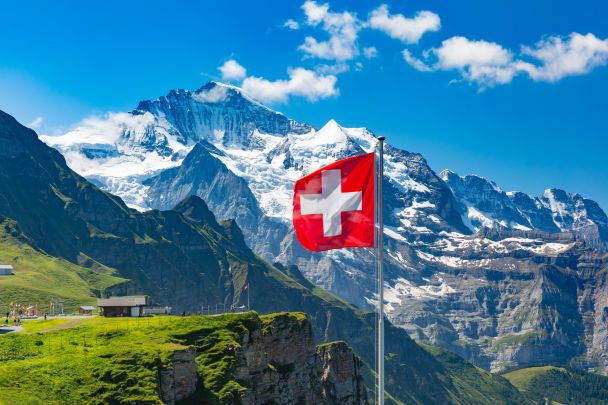
According to ТСН: The myth of absolute security and the inviolability of 'neutral status' begins to crumble. Switzerland, which for centuries avoided major conflicts, has acknowledged its incapacity to resist serious military aggression.
This was stated by the Commander-in-Chief of the Swiss Army, Thomas Süssli, in an interview with the Neue Zürcher Zeitung.
The situation in the armed forces of one of the wealthiest countries in the world raises serious concerns. The country's top military official clearly stated that in the event of a large-scale invasion, Switzerland would not be able to resist the aggressor on its own.
'What we cannot do is repel threats from a distance or, even more so, a full-scale attack on our country,' noted Süssli.
Among the reasons for such military helplessness are chronic underfunding of defense spending and an illusion of calm. As Süssli pointed out, there are serious deficits in equipment and basic supplies within the army. The figures he cited are alarming:
'It is worrying to realize that in a real emergency, only a third of all soldiers will be fully equipped.'
Süssli also emphasized that it is time to stop misleading the public.
'It has become clear to me: now rigorous honesty is necessary. The public and politicians should not believe in the army's ability to defend itself, if it is not the case,' he stated.
Why Switzerland Was Unprepared for War
The Commander-in-Chief outlined three main reasons why the country has remained calm amid global threats. The first is the lack of historical experience of war, as the last conflict on the territory of the country (the Sonderbund War) occurred back in 1847.
'Therefore, we do not have a collective memory of wars, unlike, for example, Estonia or Poland,' believes the military.
The second reason is the false sense of geographical remoteness from the front. Süssli reminded that the Russian threat is actually closer than many Swiss think.
'Secondly, the war in Ukraine seems far away to many, but in fact, there are only two countries between us and Ukraine: Hungary and Austria,' the commander emphasized.
The third factor is blind faith that the status of neutrality automatically protects against missiles and tanks. Süssli sharply criticized this illusion, reminding of the lessons of history.
'There is a notion that neutrality automatically provides protection, but this is historically incorrect. There are several neutral countries that were unarmed and were drawn into war. Neutrality has value only if it can be defended with weapons,' he summed up.
Let us remind that the head of the Pentagon, Lloyd Austin, also compared the current international situation to 1939 when World War II began. During a speech at the Fort McNair Naval College, he stated that the U.S. must urgently shift defense procurement to 'war footing' and prepare to deter growing threats. Austin emphasized that Washington's opponents are actively building military capabilities and technologies, while the U.S. response remains too slow.
This frank assessment of Switzerland's military readiness questions the traditional view of this country's neutrality. In light of global conflicts, such as the war in Ukraine, similar statements indicate an awareness of the need to update military strategy and invest in defense. This could have significant consequences not only for Switzerland but also for the entire European security context.
Read also
- 2026 Budget Amendments Get Initial Approval: Only 8 Out of 1,865 Proposals Accepted
- Tusk Urges Zelenskyy and Nawrocki to Hold Talks Amid Dispute Over UPA Honor
- Trump Administration Moves to Dismantle Ocean Monitoring Network: What It Means for Weather Forecasts
- Armenia’s Pashinyan sets three strategic goals: breaking with Russia, making peace with Azerbaijan, and pivoting to the EU
- Russian Agent Held in Kyiv for Plotting Assassination of Ukrainian Intelligence Officer Using FPV Drone
- EU’s Kallas Urges Russia-Ukraine Dialogue While Preparing New Sanctions Package