Democrats in the U.S. on Changing Course: Why the Party Won't Make Concessions.

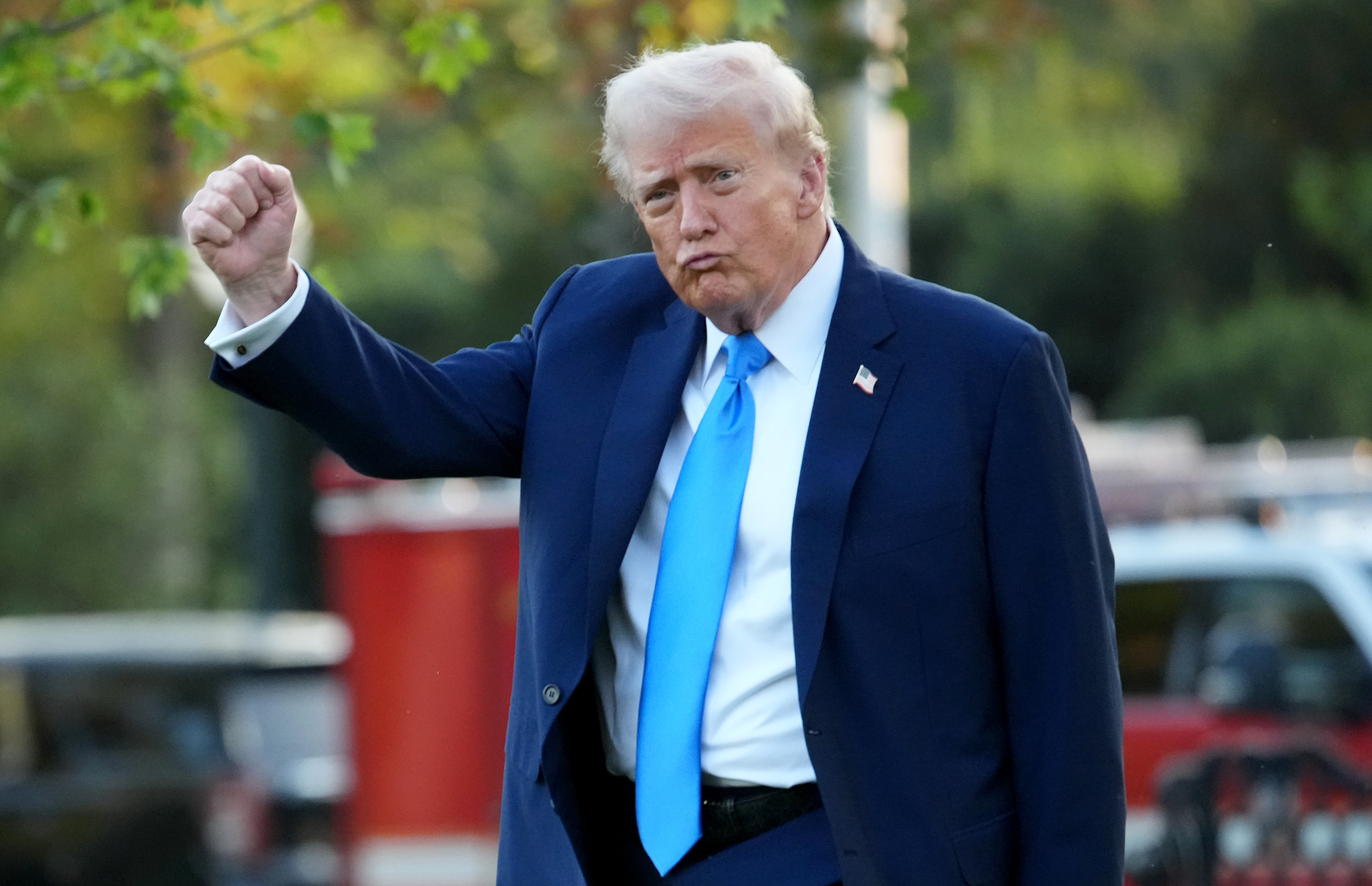
According to Vox: President Donald Trump has pushed American democracy to its limits. However, Democrats should not reduce their positions while seeking to remove him from power.
This view is widely discussed, although it has some contradictions.
New York Times columnist Ezra Klein, co-founder of Vox, noted last week that many of those most concerned about Trump “do not recognize what I think is plainly implied by this concern: the willingness to accept strategic and political decisions that you personally do not like, even if they will obviously help you win.”
Klein's perspective is understandable. There are always trade-offs between political gain and ideological purity. The less you listen to public opinion, the greater the risk of electoral defeat. If the inability to win the next two federal elections threatens democracy itself, then a mistake toward ideological restraint looks reasonable.
The Need to Win Elections
To stop Trump from further consolidating power in the judiciary, Democrats need to win a majority in the Senate next year. To do this, among other things, they probably need to win elections in North Carolina, Ohio, and Iowa - all of which voted for Trump three times, with significant margins in the last two cases in 2024. Making the Democratic Party more appealing in these regions will likely require adopting more conservative positions.
Progressives have several different responses to this argument. However, the strongest position comes from political scientists Jack Grumbach and Adam Bonica. In their argument, there is no contradiction between opposing Republican authoritarianism and the moderation of Democrats, as the latter does not actually yield significant political benefits.
Considering Facts and Arguments
Grumbach and Bonica have backed this viewpoint in a series of articles and papers. But their most prominent intervention occurred last month in a Substack post titled “Are Moderates Doing More?” In this text, the political scientists present two main arguments:
- The purported correlation between moderation and electoral success in House elections is a result of biased methodologies. When structural factors are properly accounted for, moderate candidates did not show significantly better results than progressives in 2024.
- Even if a correlation exists, it is not causal. Using advanced statistical methods to isolate the causal effect of moderation on the share of votes for Democratic candidates in House elections reveals that the benefits are either negligible or completely absent.
Other political data analysts dispute the claims of Bonica and Grumbach. Statistician Nate Silver argues that they use unreliable methods to measure candidates' ideologies and understate the benefits of moderation in their models. Pollster Lakshya Jain emphasizes that Bonica and Grumbach underestimate the correlation between moderation and electoral success, ignoring widely accepted political science rules.
I will not delve into the details of methodological disputes, as it is important to focus on the overarching question: even if Bonica and Grumbach's work is absolutely accurate, it does not mean their conclusions are valid.
They argue that Democrats do not gain from moderation on a national level, but their results do not support this, and their own theoretical arguments call it into question.
Why Moderation May Not Yield Benefits
Grumbach and Bonica have a theory about why moderation is no longer beneficial in House elections. They write:
A decade ago, when “all politics was local,” a candidate's moderation likely had significant advantages. In the Trump era, by contrast, elections are driven by national trends, candidate charisma, and anti-elite authenticity — qualities that neither political consultants nor academics know how to create.
Grumbach and Bonica emphasize selective rigor. When it comes to moderation, they argue that correlation is not causation: even if moderate candidates performed better than progressives in House elections, it does not prove that centrist positions are advantageous. In their exposition, before claiming that moderation is justified, detailed statistical analyses must be conducted.
However, political scientists find it plausible to argue that “anti-elite authenticity” drives electoral success in the Trump era. This may be surprising, as Grumbach and Bonica provide no evidence that such authenticity even correlates with better outcomes, let alone what it means.
Setting this aside, one aspect of Grumbach and Bonica's theory is regarded as true: politics has undoubtedly become more “nationalized” over the past thirty years. With the rise of cable and internet media, local newspapers gradually lose their influence, while national media become dominant.
This causes voters to view House elections through the lens of national politics, which in turn diminishes the benefits of moderation: local newspapers will likely focus on Democratic candidates and their specifics, while TikTok and Fox News typically highlight the national brand of the Democratic Party, shaping both its leadership and most well-known figures.
In turn, today’s bottom-level Democrats are less able to stand out from their party. They may hold ambivalent positions that are popular in their district, but voters may not learn about these positions or weigh them against their general preferences for Democrats.
The Rosy Hue of Moderation
Thus, it is likely that candidates for the House and Senate currently gain less from moderation than before. Theoretically, the benefits of moderation at the grassroots level may have almost disappeared, as Bonica and Grumbach argue.
However, even if they are correct, their conclusion — that moderation would not be beneficial for Democrats nationally — remains contentious.
The debates about whether Democrats would benefit from moderation largely concern national politics. For many, the key question is: would our party have won more elections if its current congressional leadership — or the presidential candidate for 2028 — took more centrist positions on critical issues?
However, when political scientists intervene in this discussion, they typically do so by analyzing what happens when base-level House candidates move toward the center. This is understandable, as every two years, there are 435 House elections featuring diverse Democratic candidates. This generates enough data for statistically significant links between ideology and outcomes.
In contrast, presidential election results are more challenging to analyze. There have only been 20 presidential elections since World War II, making it difficult to obtain reliable statistical analyses from observations that show how Democrats felt taking moderate positions in 1996, far from the phenomenon where Republicans gained support by becoming more radical in the 1980s. Thus, there is no better way to test electability theories than a careful examination of House election results.
But such results can say only so much.
A national political party adopting a more moderate agenda and a specific House candidate doing the same are two different things. And there is no reason to believe that the political consequences of the former will be the same as those of the latter.
On the contrary, Bonica and Grumbach’s theory suggests otherwise. In their exposition, moderation indeed had significant advantages in House elections when “all politics was local” — that is, when voters closely followed candidates. This indicates that the benefits of moderation may rise with attention: the more observations voters have of a candidate's ambiguous positions, the more likely they are to reward them. If this is the case, we could expect that moderation at the presidential level could have a significantly greater impact than at the grassroots level.
Even if Grumbach and Bonica are correct, and there are currently no benefits of moderation at the grassroots, this does not refute the argument for ideological restraint. On the contrary, if Democratic candidates in red and purple districts can no longer demonstrate clear ideological identities, it is even more important for the party to formulate its national positions moderately.
Current Political Supplies
There is still another reason why Grumbach and Bonica’s results do not resolve the debate on the efficacy of moderation: they measure the benefits of more “moderate” positions in all respects, rather than the benefits of moving to the center on specific issues.
When Democrats debate whether the party should become more moderate, they usually argue about this. Many progressives oppose moving Democrats to the right on any political front. Meanwhile, centrist commentators believe the party would benefit from adopting more conservative positions on issues where Democrats are currently left of public opinion.
This question cannot be resolved through the data of Bonica and Grumbach; such an attempt concerns two different questions:
- Will parties win if they adopt popular policies on pressing issues, even if it disappoints some interests of their allies?
- Do candidates whose positions are collectively more moderate perform better than those whose positions are collectively more progressive?
These questions may have different answers. On many issues, the progressive position is more popular than the moderate one (for example, voters overwhelmingly support Congresswoman Alexandria Ocasio-Cortez's proposal to cap credit card interest rates). Theoretically, moderate candidates can benefit from more conservative positions on issues like immigration and crime, while simultaneously losing due to an overly centrist stance on economic issues. If this is the case, it is entirely possible that moderate Democrats may not actually outperform progressive candidates — and that the Democratic Party could gain votes if it moved to the right in policing and immigration policies.
To be clear, I am not claiming that any of this is necessarily true, only that it is logically possible. Maintaining popular positions (whether progressive or moderate) may be politically advantageous, even if typically support for more moderate positions is not.
There is evidence that taking voter preferences into account is still politically beneficial, even in today's information environment. In a recent study, voters became 14 percentage points more likely to support a candidate upon learning that they shared a common position.
Time for Caution in Political Deliberations
I believe it is possible to combine concerns about Trump’s authoritarianism with opposition to Democratic moderation. For example, one can recognize that the president is trying to sabotage the economy, and that mass recession will once again bring Democrats to power, regardless of their positions. In such a case, a maximally progressive Democratic Party could be better than a maximally popular one: it is important to assemble a Senate and House majority composed of people willing to implement the bold reforms America needs, which in turn may reduce the appeal of Trump’s thrones in the long run.
However, in these dangerous times, it is crucial that Democrats do not underestimate the risks of ideological intransigence. Perhaps the dangers of forsaking moderation are minor, as Grumbach and Bonica assert. But their work does not truly prove this. And Democrats should not act based on notions that it is so.
Read also
- Antique Musket Balls Repurposed Into Solar Cells with 94% Efficiency
- South Korea Patents a Silent Engine for Air Taxis
- 144 FPS at 4K: A Gamer Pairs an RTX 3090 and RTX 3050 for Stunning Performance
- Snapdragon 8 Elite Gen 5: Qualcomm’s New Chip Targets Sub-$600 Smartphones
- Samsung Unveils Three New Odyssey Gaming Monitors: Specs and Features Revealed
- Plastic Waste Converted into Jet Fuel: New Breakthrough by Chinese Researchers