LiDAR scanning revealed a lost medieval castle in Switzerland: details of the discovery.

Archaeological Discoveries in Switzerland
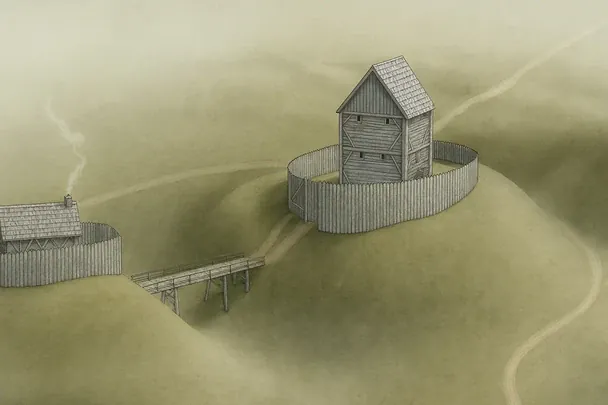
According to ТСН: In Switzerland, archaeologists made an unexpected discovery thanks to remote laser scanning data. During the analysis of detailed LiDAR maps of the terrain in the canton of Thurgau, the remains of a medieval castle, previously unknown, were found. The images show two small natural plateaus divided by sharp defensive ditches – these features are typical for motte-and-bailey-type fortresses.
This was reported by Heritage Daily.
Such fortifications became popular in Northern Europe from the 10th century after their introduction in Normandy and Anjou. The architecture of the structures was simple and effective: on an earthen mound, or "motte", a small keep was built, and next to it, an enclosed courtyard, or "bailey", was situated. Thanks to this construction, fortresses were built quickly and without significant labor costs.
Importance of the Discovery
This finding is of great significance for studying the history of the Ittingen fortress, the location of which has sparked numerous debates. Scientists considered three potential sites: the Hryutzbuk mound in Wart-Waeningen, the territory of the Ittingen charter, and the Tebeley area. Thanks to the new LiDAR data, a promising site was identified in the Tebeley area.
After detecting signs of fortification on the LiDAR maps, the Thurgau Cantonal Archaeological Service conducted an authorized field survey. During the inspection, small fragments of pottery, several iron objects, and three medieval arrowheads were found.
Documents and Further Research
A document from the papal chancellery in 1152, which mentions a permit for building a monastery "at its castle", provides new information in history. This suggests that part of the medieval fortifications may have once been located on the grounds of the modern Ittingen Charterhouse.
The Thurgau Archaeological Office decided to refrain from excavations in order to preserve the site in its pristine condition for future research using the latest methods. The artifacts found have been sent for restoration and further analysis.
Let us remind you, archaeologists also studied what the climate was like during the period from 18,000 to 7,500 years ago when the planet was exiting the last ice age. This research helps to understand the changes that occurred in nature and their impact on human life in ancient times.
Read also
- Buses from Ukraine to Poland Suspended for 18 Months Due to Repairs at Shehyni-Medyka Border Crossing
- Suitcase delivery to parcel lockers across 8 EU countries launched by InPost – pricing revealed
- Bus Service to Poland via Shehyni Checkpoint to Halt for 18 Months Starting June 15, 2026
- Over 10 Odesa Beach Zones Certified and Ready for Summer Season
- Anticipating Summer Ticket Surge, Ukrainian Railways Shares Booking Tips
- Europe's Airports Face Six-Hour Queues: IATA Warns of New Crisis