Record-Breaking Drone Strike Hits Russian Oil Refinery: Inside the Attack.

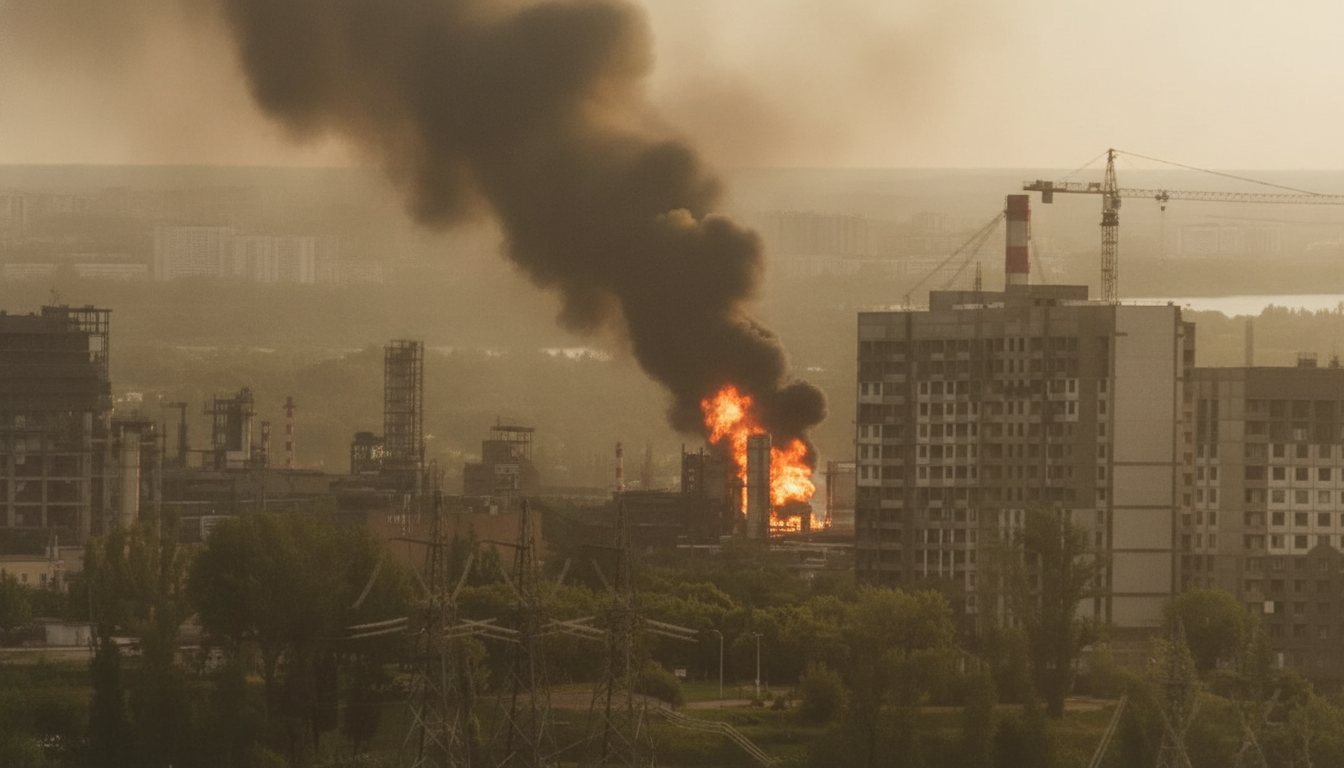
Strike on the Tyumen Oil Refinery
According to UATV: On June 20, Ukraine's defense forces carried out a strike on the Tyumen Oil Refinery in Russia, one of the country's largest privately-owned refining facilities. The operation was made possible by long-range drones that set a new distance record. President Volodymyr Zelenskyy confirmed that Ukrainian long-range capabilities reached the Tyumen region and successfully hit the oil processing complex at an unprecedented range.
Located roughly 2,000 kilometers from Ukraine's border, the Tyumen refinery has an annual processing capacity of 7.5 to 9 million tons of crude oil. Following the attack, local residents reported hearing at least two explosions near the facility. Prior to the incident, an air raid alert had been declared in the city, indicating preparations for potential strikes.
Technology and New Capabilities
The refinery also experienced an emergency pressure release in its technological system, suggesting serious operational consequences. The FP drones used in this attack can reach targets up to 3,000 kilometers away. Zelenskyy also announced a new upgraded version of the FP-1 drone, unveiled by the company Fire Point at the Eurosatory 2026 international exhibition in Paris, with a range of up to 2,700 kilometers.
'New upgraded FP drones have been put to work: they can now hit targets at a distance of 3,000 km. I am grateful to the engineers at Fire Point. These are fully justified responses to Russian strikes against our country. The plan for Ukrainian long-range strikes is being implemented' — Volodymyr Zelenskyy.
This strike is part of a broader Ukrainian strategy to employ long-range unmanned aerial vehicles for hitting targets at significant distances. Extending the reach of these attacks could substantially enhance Ukraine's military capabilities and its ability to counter threats from Russia. Notably, this shift may alter the regional balance of power, presenting new challenges for Russian defense systems.
Read also
- Russian Forces Intensify Eastern Ukraine Offensive: 16 Attacks in One Day, but Ukrainian Defenses Hold Firm
- Polish Deputy Urges Restraint and Dialogue with Ukraine After Zelenskyy’s Order Revoked
- Ukraine Gets Green Light from Washington for Patriot Missile Production, Zelenskyy Says
- Europe's Negotiator with Russia to Be Chosen by Ukraine: Fresh Insights from the European Council Summit
- President Zelensky Responds to Revocation of the Order of the White Eagle: A Statement on Political Motives
- US Signals First Positive Response to Air Defense Licenses; Final Decision Rests with Trump