Scotland's Rare Roman Altars to Go on Public Display Following Restoration.

Discovery of the Altars
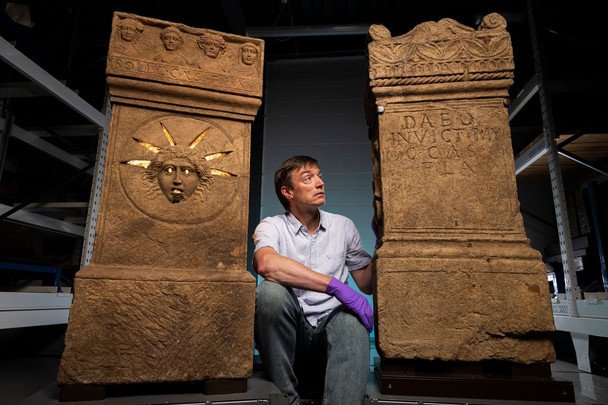
According to TSN.ua: Two stone altars, unearthed at a Roman fort near Edinburgh, will be shown to the public for the first time after undergoing restoration. Dating from around 140 AD, these altars were part of the northernmost temple of the Roman Empire, dedicated to the god Mithras. They were excavated in 2010 at Inveresk in East Lothian and were acquired by National Museums Scotland in 2016. The discovery of Mithraic altars this far north is exceptionally rare, highlighting the reach of Roman religious practices.
Exhibition "Roman Scotland"
The exhibition featuring these historical artifacts, titled "Roman Scotland: Life on the Empire's Edge," will open in November 2026 and run until April 28, 2027. Both altars were consecrated by a legionary centurion, likely Gaius Cassius Flavianus. This event marks a significant milestone in the study of Roman history and culture in what is now Scotland, as the altars represent not just religious but also cultural artifacts from that era. The exhibition will explore the complex frontier dynamics between the Roman army and the indigenous peoples they encountered.
The display promises to be a major event for anyone interested in the history of the Roman Empire and its influence on territories that are now part of Great Britain. The recovered altars will form part of the narrative about life on the imperial frontier, detailing religious practices and the interaction between Roman culture and local traditions.
This exhibition not only draws attention to Scotland's Roman heritage but also underscores the importance of archaeological finds for understanding cultural exchanges between Romans and local populations. Given that the area of modern Scotland was at the edge of Roman influence, the display aims to provide fresh insights into how these interactions occurred and which religious practices were prevalent at the time. It may also encourage further research in this field, opening new avenues for exploring the region's history.
Read also
- Bus Service to Poland via Shehyni Checkpoint to Halt for 18 Months Starting June 15, 2026
- Over 10 Odesa Beach Zones Certified and Ready for Summer Season
- Anticipating Summer Ticket Surge, Ukrainian Railways Shares Booking Tips
- Europe's Airports Face Six-Hour Queues: IATA Warns of New Crisis
- Malmo to Narvik by Night Train: Snälltåget Launches New Service with Fares and Schedule
- Ukrainians Struggle to Buy Train Tickets as Ukrzaliznytsia Rolls Out New Summer Schedule