Chefs Criticized Penne: What Pasta They Consider the Worst.

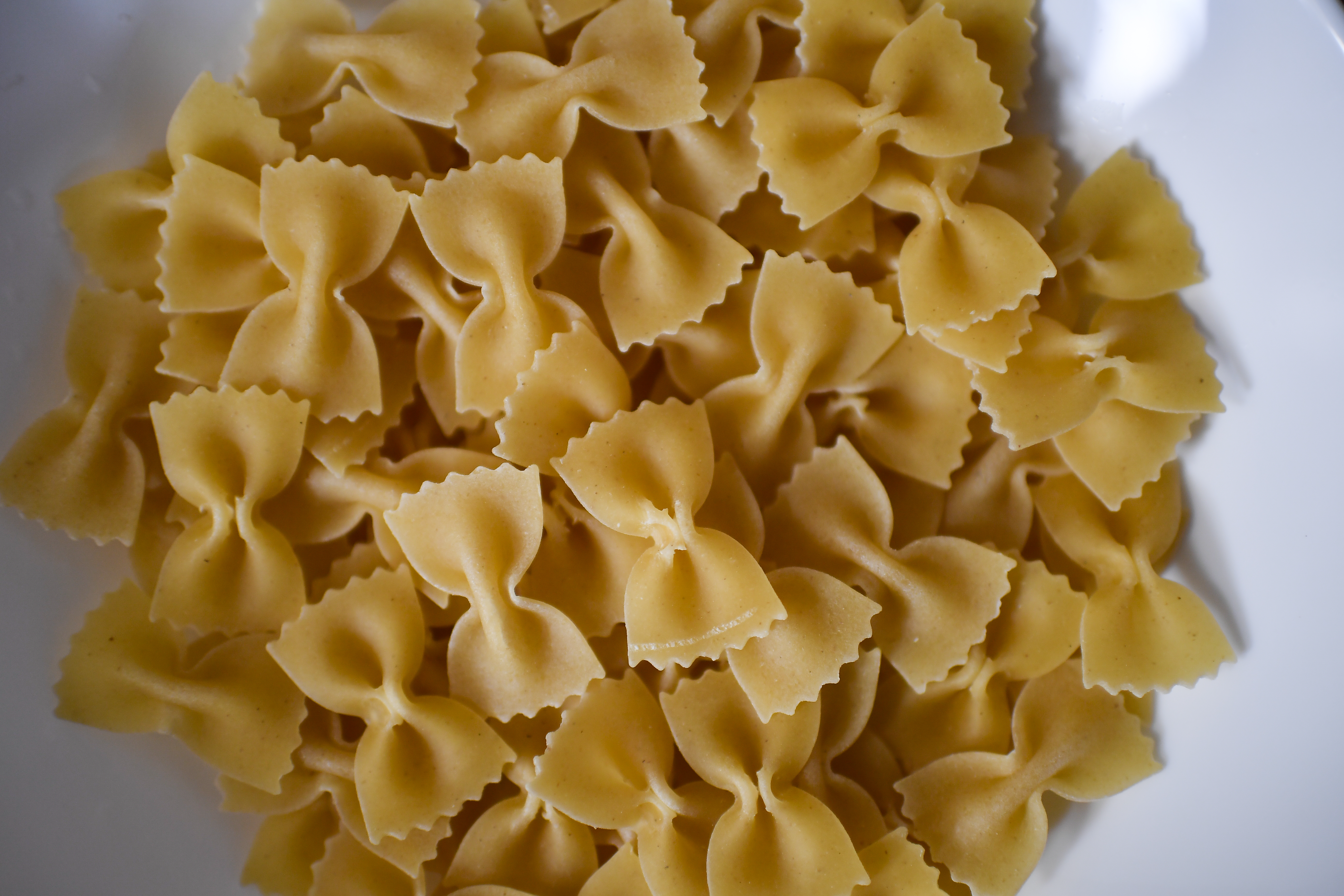
According to Vox: If I find myself in a kidnapping situation and need to signal that something is off, I would loudly proclaim that farfalle is a wonderful shape of pasta.
I would incessantly talk about how it always cooks well—even its 'butterfly' knot. I'm sure that butterfly pasta is perfect for any sauce, as it absorbs every drop and is easy to eat with a fork. I would insist that it should be served at large gatherings since all our culinary experiences should reflect the tastes of children and guests.
I hope that anyone who hears this will understand: these words are spoken by a person in distress, and they will call the police. No one in their right mind would say such a thing about farfalle.
Farafalle is considered a bad shape of pasta—fickle, nonsensical, unworthy of any real sauce. Along with similarly impoverished shapes like angel hair and wagon wheel, it diminishes the pleasure of eating pasta. Some of these shapes are so terrible that they are sent to pasta purgatory, a sort of culinary 'black list.'
It’s no secret that these noodles are not the best. Discussions about the 'worst' shapes are heated online, and their well-known flaws have become commonplace. Yet, they still exist. Some less fortunate shapes, like the traditionally popular penne, leave no chance for a new choice at all.
If pasta is so good, why are some shapes so bad? If they are so clumsy, why do they keep existing? Why don’t we just free ourselves from the tyranny of farfalle?
Why Penne is Actually Bad
To understand what people mean when discussing 'bad' pasta shapes, it’s helpful to know what makes good shapes so good. Over the years, with the rise of interest in food and culinary arts, shapes like rigatoni, bucatini, and orecchiette have reached the pinnacle of the pasta hierarchy.
What do we love about our favorite shapes?
One of the key traits is that they are usually easy to cook and cook evenly, which makes achieving that holy state of al dente easier.
It’s also important how the pasta holds sauce. Chefs assert that grooves, ruffles, and pockets are perfect for thick sauces, confirming rigatoni’s status. As for noodle shapes, many excel in thin, oily, seafood sauces (think: vongole). But the best can achieve even more. Bucatini with its hollow center actually becomes a straw, perfect for everything, but especially for silky carbonara.
Scott Ketchum, CEO and co-founder of Sfoglini, a pasta-making company, contemplates pasta daily.
“We made two grooves that are perpendicular to the surface—it was the hardest part of this shape because technically speaking, it's difficult for pasta,” said Ketchum.
According to culinary experts, there are about 350 shapes that are officially recognized. Given this number, it’s impressive that author and chef Alison Roman can quickly identify her least favorite shape, which is undoubtedly worse than at least 349 of its counterparts.
“I believe penne is absolutely the worst shape of pasta on the planet,” said Roman, a renowned pasta maker and author of the cookbook Something From Nothing. “I’ve always thought so since childhood.”
Like any good vendetta, Roman spent quite a bit of time contemplating the reason for her disdain—why does the combination of flour, water, and eggs shaped into a tube with pointed ends irritate her?
“I concluded that the hole is somehow both too small and at the same time too big,” she said. “I don’t like the pointed ends, okay? And the ruffles aren’t ruffly enough.”
According to her, the bad path of penne and its angled openings are not big enough to hold large chunks of sauce. At the same time, they are too big for thinner sauces. I asked her about an alternative without ruffles to penne, and she replied that it violates pasta rules.
“If you can accept joy in your heart, if you can’t take yourself seriously, then you can accept that butterflies are actually pretty good.”
Alison Roman, chef and author
Ketchum also dislikes penne.
He noted that penne remains one of the most popular shapes in the country, if not the world—according to Ketchum, this is due to people consuming it so often that it has become their default shape.
I asked Morgan Bolling, executive editor at America’s Test Kitchen, if she has a similarly hated pasta shape. The answer: rotelle, or wagon wheel.
“In life, I love whimsy and lightness,” said Bolling. “But in pasta, maybe I think—no.”
The wagon wheel is perhaps the most whimsical shape, trying to entertain but not taking itself seriously enough to be worthy of consumption as pasta. Its round shape does not allow it to stick to sauces. Its numerous openings, according to Bolling, do not hold chunks of tomatoes, sausage, or vegetables that one might want to see.
As for bad pasta shapes, their flaw sometimes lies in the existence of better noodles. Bolling points out that orecchiette (or 'little ears') has the whimsy of a wagon wheel, but its depressions can hold bits of breading, sausage, and broccoli.
“I don’t feel like wagon wheels deserve a place in the world anymore,” Bolling adds.
If survival of the fittest were the rule, bad pastas would have disappeared long ago. A magical world without wagon wheels or penne might become reality. But the world of pasta operates on different rules.
Who Still Buys Bad Pastas?
If you’re reading this and thinking: “Oh, Alex, I just can’t recall a pasta shape I hate. They’re all so wonderful!” First of all, you’re lying. Secondly, remember the least attractive pasta salad you ever tasted. That is where the worst shape resides.
“You go to parties, boiling or fairs, and someone brings a bad pasta salad—that’s, in my opinion, wagon wheels,” says Bolling.
The bad shapes of pasta I discussed with experts are often the result of circumstance rather than your personal choices. Thus, we usually encounter them at gatherings where the line between food we love and food forced upon us is exceedingly thin.
These 'cursed' communal dishes, including baked pasta, share several common traits: no one knows who brought the bad pasta salad. No one is sure what’s in it. No one knows who took it home. All anyone knows is that it’s not something they would like to taste.
While pasta salads vary, genuinely worthy versions exist. But the common issue with bad ones is an overly oily dressing, a lack of spices, and large chunks of ingredients. A bad shape only exacerbates these elements.
The emergence of bad pasta shapes and their inevitable presence in our lives has created a frustrating pasta paradox. If people are aware of the flaws of pasta shapes such as penne and wagon wheels, and do not enjoy consuming them, why do companies still produce them? Are there so many people preparing bad pasta salads to sustain revenue? Not really.
“People are passionate about the pasta shapes they grew up with,” noted Ketchum. He explained that nostalgia and childhood sentimentality may explain why people continue to buy and consume unpopular shapes, even when they realize rigatoni would be a better choice.
I asked Ketchum about wagon wheels, and he confirmed that he actually has warm childhood memories of eating them in a 'baked' dish at an Italian restaurant in his hometown. While he does not believe that one restaurant holds the entire fate of the wagon wheel shape, he thinks it’s not out of the question.
“Interestingly, we actually talked about the possibility of wagon wheels making a comeback this year,” Ketchum said, noting that he and his team considered tweaking the length of the spokes or finding a way to give the pasta deeper pockets. “We decided against it, but a lot of my team was really interested.”
However, more realistically, bad pasta might be one of those strange antipathies of humanity.
“There are many things in this world that I consider bad that millions of people love,” said Roman, a chef, author, and true pasta enthusiast. “I feel really confident in my taste, but I’m often wrong. So many things become successful that I find terrible. So who knows? One man’s trash is another man’s treasure.”

Read also
- Russian Font Found on Banknote Featuring Ukrainian Poet Stus; NBU to Redesign the Bill
- 501 Fallen Repatriated to Ukraine; Over 300 Died While in Captivity
- Ukraine Receives 522 Bodies in Its Largest-Ever Repatriation Operation
- Statehood Day Marked Across Ukraine with Prayer Services and Public Gatherings
- From Survival to Growth: How Education and Its People Are Reshaping Kharkiv
- 23 Children Rescued from Occupied Territories: A New Win for Ukraine’s Bring Kids Back UA Initiative