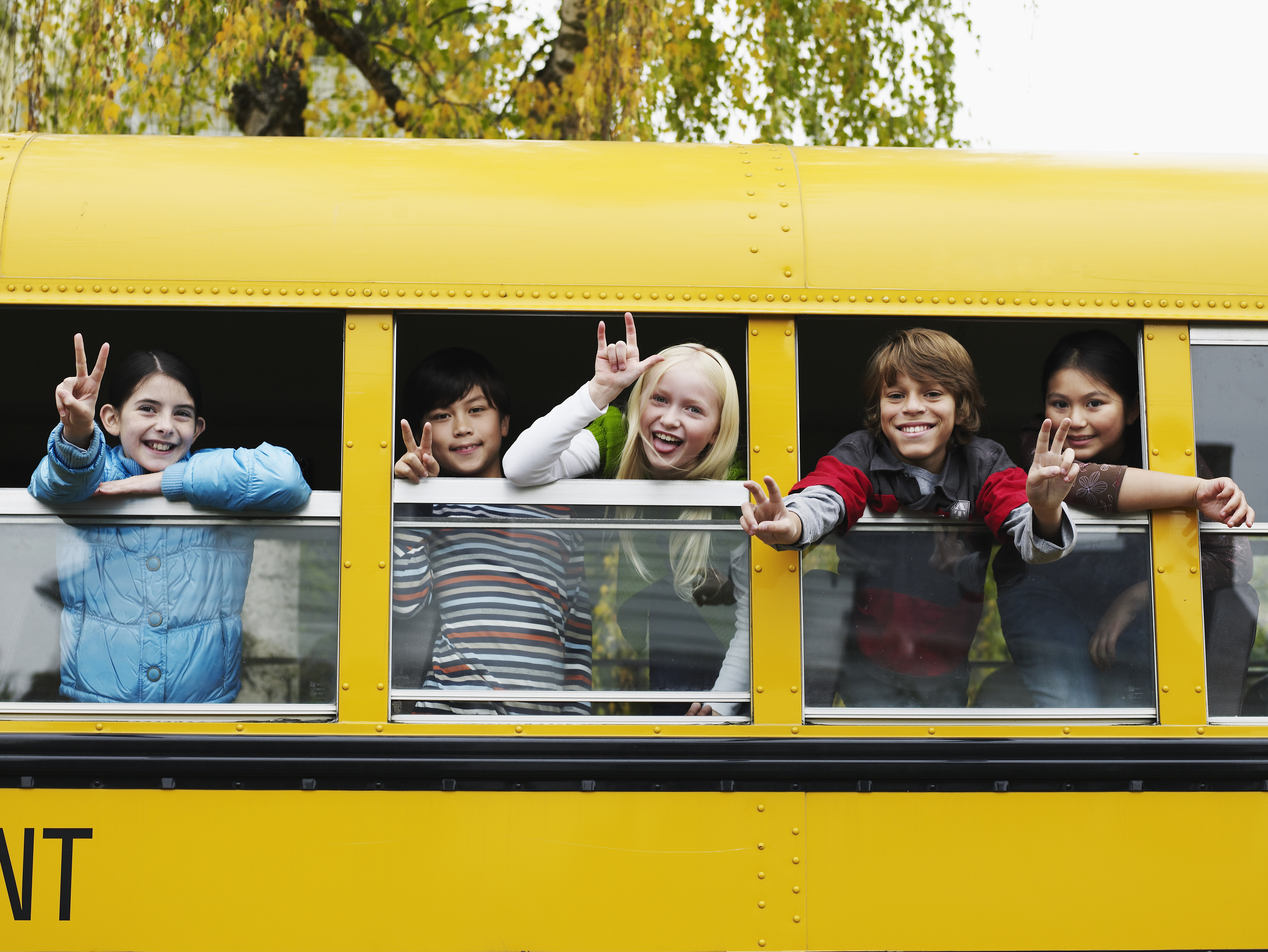
Children Are Massively Posing with the Peace Sign in Photos: What This Trend Means.

According to Vox: This story first appeared in Kids Today, Vox's newsletter about children for all. Subscribe here for future editions.
Recently my children posed for a photo, and the older one, like older brothers of olden times, threw up a pair of bunny ears behind the head of his younger brother.
Or at least I thought so.
“That’s not nice,” I told the older one. He looked at me with a blank stare.
“What?” he asked. “It’s just a peace sign.”
I believe him. At least for the past year, the peace sign has become my son's favorite photo pose. First day of school? Peace sign. Birthday? Peace sign. Showing off his Lego creation? Of course, the peace sign. (By contrast, I don’t remember him ever posing with bunny ears, a popular way to joke around in my generation.)
But it’s not just his thing. Every time the class takes a photo, the peace sign is guaranteed to be present. An informal poll of kids and parents suggests this practice is quite widespread. “Everyone does it,” said 5-year-old Rhodes. “I started doing it when I was in middle and high school,” admitted 11-year-old Alison. Mom Kate Ellen from the UK noted that her daughters, ages 9 and 5, and their friends also pose with that gesture.
The peace sign, or V-sign, has existed for almost a century and has long been part of American cultural lexicon. But today it seems much more popular than many years ago and has a new meaning for this generation of kids—even if that meaning is sometimes not fully understood.
Origin of the Peace Sign
The modern V-sign—two fingers, palm facing the viewer—originated during World War II as a symbol of victory over Nazism. Later, in the 1960s, American activists began using it to protest the Vietnam War.
The shift in meaning of this gesture was part of a larger movement, notes Julia Fell, curator of exhibitions at the Bethel Woods Museum. ‘In the 1960s, other cultural expressions, like clothing related to military themes, were turned upside down by counterculturists as a form of protest,’ she wrote in an email.
Thus, a gesture that once meant victory became a symbol of peace. Over time, its meaning became more generalized. When I was growing up in the 80s and 90s, it was a time when the peace sign could serve as a greeting or farewell, or just as an accessory to “hippie” Halloween costumes. But at least in my memory, that gesture was not a common pose for photos—not like it has become for my son.
So, what drives the rise of the peace sign among Generation Z and Generation Alpha? One possible reason is the influence of Japanese pop culture, particularly anime.
In the early 1970s, the peace sign began to spread in Japan, possibly due to an advertising campaign for cameras. Young people in Japan began using the peace sign in photos, and anime characters also started to display it.
Today, this gesture often appears in shonen-style anime shows when a character celebrates victory in a battle or tournament. “It seems closer to the original meaning of the sign,” said Nicholas Friedman, publisher of Crunchyroll News. “But in slice-of-life anime shows or romantic comedies, ‘people are just chilling, taking pictures, they're in photo booths and showing the peace sign.’ For example, in contexts related to cute culture in anime.”
There’s even a Pokémon, Victini, that essentially is a living peace sign.
Anime has been popular for years, but now it is more integrated into children’s lives than before. While Millennials might have watched Pokémon or Yu-Gi-Oh on Saturday mornings, modern kids discover anime through word of mouth, social media, or TikTok clips, having access to thousands of shows.
The kawaii aesthetic is now widely spread in American childhood culture, including stuffed toys and coloring books. Characters outside of anime—like in Disney+ shows—regularly show big, cute eyes to express emotions.
The popularity of the peace sign is at least linked to the overall culturally dominant kawaii. People do it in photos because “they want to look cute,” noted Rhodes.
Why Kids Need the Peace Sign Now
In speaking with kids and adults, I’ve concluded that another reason: kids do the peace sign in photos because they, more than previous generations, need something to do with their images.
“It looks more natural than keeping your hands at your sides,” Alison told me. “It also makes the photo a bit more interesting to look at, especially if you're the main character.”
Whether Generation Alpha is too clean to joke around with one another, or it’s just never been that funny, bunny ear gestures might be going out of style.
Ellen, a mom from the UK, says her kids express the sentiment that no one really knows what the peace sign means, and that “it’s just a pose for photos.” I think this gesture is already as commonplace as saying “cheese”—if not more.
The process of losing specific meanings for cultural signs has become a common phenomenon in recent years. While Millennials might have contemplated using gestures or other trends, Generation Z and Generation Alpha “just do it.”
Part of this may be philosophical—a deflated, “it’s not that deep” attitude. But another part is certainly aesthetic: kids are photographed in much larger quantities than in the 80s and 90s, they see photos of themselves much more frequently, and they grow up in a culture that considers how to pose for images. It’s no wonder they might seize on a gesture that is associated with cuteness and, as a bonus, gives them something to do with their hands.
My son may soon opt for something more than the standard peace sign. Alison recently completed an exchange in Japan and noted that the “gyaru peace sign, named after a popular fashion subculture, has the palm facing up, and the fingers spread,” as well as that “the side peace sign, where the eye is pinched between the fingers, is also popular.”
Meanwhile, whether Generation Alpha is too clean to joke around with one another, or it’s just never been that funny, bunny ear gestures might be going out of style. When I asked Rhodes about this, he had no idea what I was talking about.
What I’m Reading
Dozens of children were already on planes Sunday evening when a judge blocked the Trump administration from deporting them to Guatemala—at least for now.
“Artificial intelligence has changed my impressions of education,” writes school graduate Ashanti Rosario in The Atlantic, adding that “these programs have destroyed much of what connected us as students.”
A program in New York is closing certain streets to vehicular traffic this summer, and nine-year-old New Yorker Julian M. wrote an article about the joy of being able to enter the street on his own. “When I got home, I felt pretty happy as if I had achieved something,” he says.
My little son is currently obsessed with Too Busy Marco, a comic book from brilliant cartoonist Rosa Chast, in which a little bird simply can’t sleep until it invented invisible bubble gum, painted a masterpiece underwater, and started a career as a professional bowler. It’s easily relatable for my son as he can’t sleep until he shouts about a multitude of things.
Read also
- Three Ukrainians Without Documents Rescued from Occupied Territories Under Bring Kids Back UA Initiative
- Ukraine’s first underground kindergarten opens in Kharkiv, accommodating 260 children
- Ukraine's ports crippled by Russian strikes: 28 vessels hit, 21 killed
- 24 Children Rescued from Occupied Territories by Save Ukraine, Including Injured 13-Year-Old Anhelina
- Woman Faces Up to 7.5 Years in Prison After Attacking Children for Speaking Ukrainian in Poland
- One of the Most Recognizable Voices on Ukrainian Radio, Journalist Oleksandr, Has Passed Away