NASA’s X-59 QueSST Returns to the Sky: Testing a Quieter Supersonic Jet.

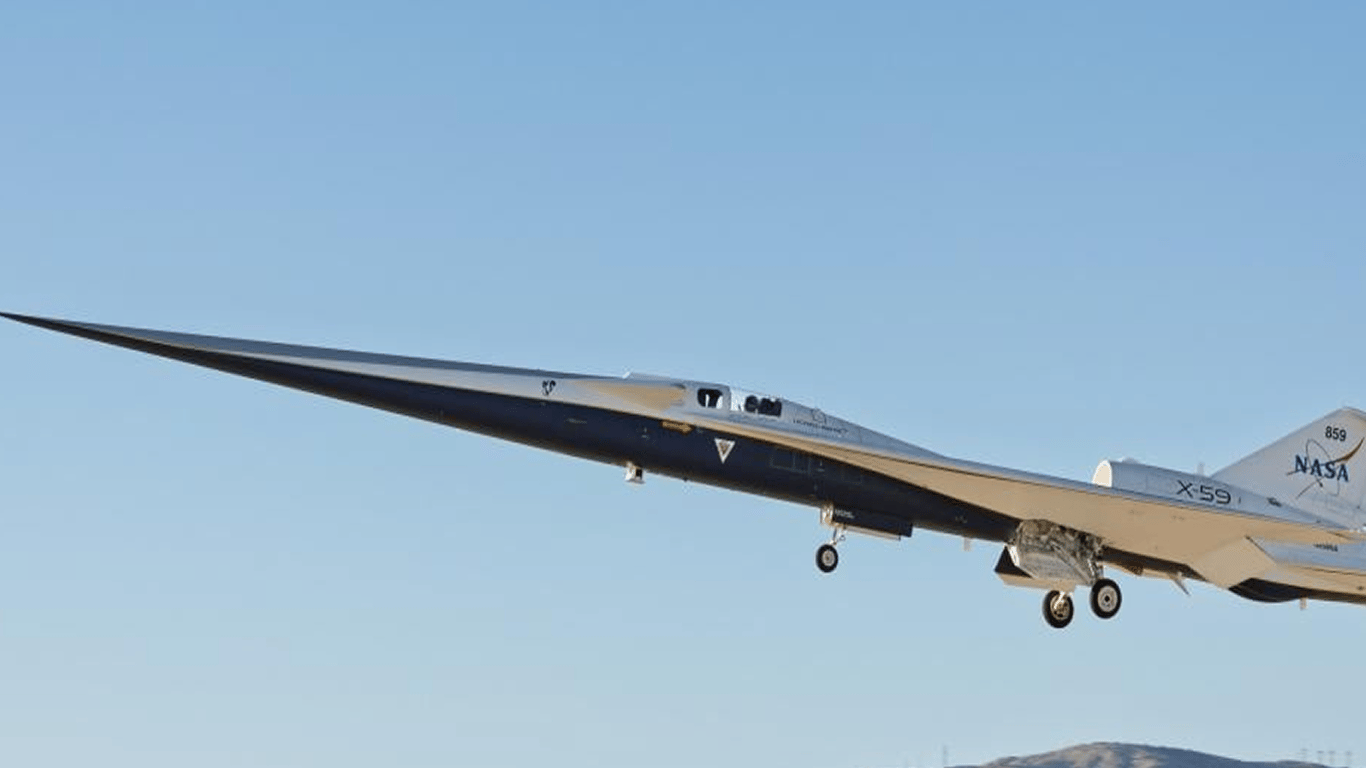
X-59 QueSST Flights Resume After Technical Setback
According to Novyny.live: The experimental X-59 QueSST aircraft has resumed its flight campaign following an earlier technical incident. Designed to achieve quiet supersonic travel, the plane is now undergoing fresh tests aimed at meeting ambitious performance targets.
Flight operations for the X-59 QueSST restarted in late March. Its first sortie lasted 53 minutes, climbing to roughly 4 km and reaching speeds above 500 km/h. A second flight took place at an altitude of 6 km, where the aircraft hit 600 km/h. The development team plans to eventually push the jet beyond 18 km in altitude and to around Mach 1.5—a critical milestone for the program.
Technological Breakthroughs and Environmental Impact
Aircraft exceeding the speed of sound typically produce a sonic boom measuring up to 100 decibels. However, the X-59 QueSST team is focused on lowering that figure to 75 decibels, aiming to reduce noise pollution for communities below. Findings from this program will be shared with international aviation authorities, marking an important step toward global standards for supersonic flight.
Meanwhile, the Overture supersonic passenger jet is being eyed as a potential commercial successor. Technologies refined through the X-59 QueSST project could help shape new norms across the aviation industry.
“The return of the X-59 QueSST to flight is a strong signal of progress in developing technologies that could redefine supersonic travel.”
Source: Expert opinion
Successful trials in sonic boom reduction could lay the groundwork for updated international regulations. That, in turn, may unlock new opportunities for commercial aviation—improving quality of life for residents near airports and significantly transforming the air travel market in the years ahead.
Read also
- Windows That Generate Power Even at Night: A New Solar Innovation
- GE Aerospace’s Hybrid-Electric Aircraft Reaches 30,000 Feet in Key Test Flight
- Kyiv Officially Launches 5G: Coverage Areas and Speed Details Revealed
- World’s First Safety Certification Awarded to Swedish Wave Energy Converter Inspired by the Human Heart
- First U.S.-Ukraine Drone Agreement Signed: What It Means for Defense Cooperation
- OpenAI’s AI Agent Breaches Hugging Face in an Unprecedented Cybersecurity Incident