Russia has changed its missile strike tactics: the new goal is to sever the energy bridge over the Dnipro.

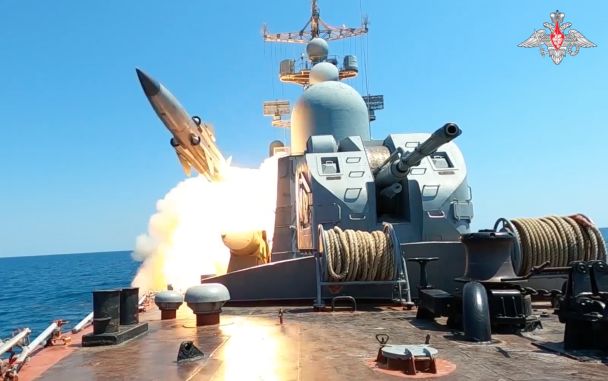
According to ТСН: The military actions of Russian occupiers have shifted from chaotic shelling to a tactic of concentrated attacks, with the enemy attacking from all possible directions. The modernization of Russian weapons and continuous production allow for a high intensity of attacks. The main goal of Moscow remains the energy paralysis of Ukraine and its plunge into a complete lockdown.
Dmytro Zhmaylo, executive director of the Ukrainian Center for Security and Cooperation, noted that 'the Russians are trying to ensure that there is an energy surplus in the west of the country and an energy deficit in the east, southeast, and south.'
Change in enemy tactics
The expert reported that the pace of drone production in Russia reaches 190 units per day. This refers to the 'Shahed' and 'Gerber' drones. Since the beginning of 2022, this number has increased fivefold. At the same time, the number of missile attacks has decreased from approximately 1,645 to 1,330 units per year.
Despite the improvements made by Chinese specialists, the effectiveness of Ukrainian air defense systems remains high. 'Understanding that we do not have enough air defense systems, the enemy concentrates on choosing one region. Everything that it previously dispersed across the entire territory of Ukraine is now aimed at paralyzing infrastructure to increase the recovery time from these attacks,' the expert emphasized.
In the example of Odesa and Dnipropetrovsk region on January 7-8, it is clear that the enemy hopes to plunge specific regions into lockdown by attacking from all directions.
Zhmaylo also noted that 'he is concentrating more on the southern regions and somewhat on the eastern regions.' Russia intends to sever the energy bridge over the Dnipro to create an energy surplus in the west and a deficit in the east and south of the country.
As mass attacks did not yield the desired results, Russia is focusing on specific regions, trying to increase pressure on Ukrainians and force them to advocate for the return of electricity, which could lead to social tensions.
Moreover, on January 9, the Russian army carried out a combined strike on critical infrastructure facilities in Ukraine using drones and missiles. The main target of the attacks was the Kyiv region.
In the evening of January 8, Russia struck Lviv with a medium-range ballistic missile 'Oreshnik' for the first time during the war, considering that the city is less than 70 km from the border with the European Union. According to military reports, the missile was traveling on a ballistic trajectory at a speed of about 13,000 km/h, which is 'extremely high speed.'
The situation at the front remains tense. The Russian army is adapting its tactics, focusing on specific regions to achieve its strategic goals. This underscores Ukraine's need to enhance its defense systems and further international cooperation.
Read also
- Ukraine Launches Its First EU Accession Negotiation Cluster: What It Means for Citizens
- Polish Lawmaker Sparks Outrage by Calling for Normalized Ties with Russia
- Kyiv Lawmaker Slams Metro Fare Hike: Annual Costs Could Reach 46,000 Hryvnias for Residents
- New EU Accession Talks with Ukraine Set for Summer, von der Leyen Announces
- Russia's Offensive in Donetsk Loses Momentum: Expert Points to a Turning Point
- Trump Signs Landmark Deal with Iran: Ceasefire, Sanctions Relief, and Nuclear Terms Take Center Stage