Expert on buffer zone: why this issue is currently irrelevant.

According to FREEДOM:
Expert commented on the buffer zone issue
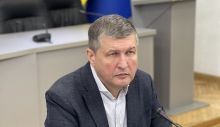
Igor Popov, an analyst at the 'United Ukraine' center, appeared on the FREEДОМ TV channel to share his thoughts on the potential creation of a buffer zone between Ukraine and Russia. He emphasized that this issue is technical and should not be discussed until a ceasefire is reached. Popov also noted that the current war has a new nature, and the technologies for creating such zones need improvement.
“The so-called buffer zone, which was written about in foreign media, is actually a very technical question. It is not even secondary but the last on the list that needs to be addressed. It is part of the standard technology for resolving a military conflict. When the war ceases, but claims between the parties remain, a boundary line is fixed,” said Popov.
The expert emphasized that first, ceasefire regimes and monitoring mechanisms must be established, for which a peacekeeping mission is usually deployed.
“Part of the monitoring involves withdrawing heavy weapons to 40 km. Why 40 kilometers? This is the maximum range of long-range artillery. To ensure that small arms do not hit between the extreme points where the units with small arms are located, there are also 2-3 kilometers left, while heavy weapons are moved 40 kilometers away,” he said.
Popov underlined that Ukraine has already experienced similar situations in 2014-2015 but noted that today the conditions have changed radically.
“But in this case, as the President of Ukraine mentioned, we do not have heavy weapons positioned within that distance, nor does the enemy have it, as all of this is targeted by drones. The war is somewhat of a different type now, and these technologies will need to be improved,” added the analyst.
Popov mentioned that currently, we are talking about creating a demilitarized zone to reduce the risk of the resurgence of hostilities. As part of the preparation for a ceasefire, discussions are planned regarding territories free of heavy weapons.
“And then any movement of armored vehicles into this zone is monitored. Everyone starts calling and telling that something is happening there, and they need to be withdrawn back. But for now, Russia continues to present deliberately unachievable demands for a ceasefire, so, unfortunately, it cannot happen at this time. Therefore, we still hope for the results of negotiations specifically about the modalities and conditions for a fair and stable end to the war,” Popov concluded.
It should be noted that earlier, President Volodymyr Zelensky commented on proposals to create a buffer zone between Ukrainian and Russian troops. He pointed out that such initiatives are supported by those who do not understand the realities of modern warfare, as Ukraine and Russia have already withdrawn their heavy equipment to a distance of 10 km, so this zone already partially exists.
The position of experts and officials concerns important aspects that may affect future peace negotiations. The understanding that the buffer zone is only a technical issue arises against the backdrop of existing demands and diplomatic efforts from both sides. It is important that actions aimed at reducing the risk of armed conflict and ensuring the safety of residents in border areas may become a priority for Ukraine and the international community.
Read also
- Resignation of Svyrydenko and the Energoatom Bribery Scandal: Inside Ukraine’s Government Shake-Up
- Strikes on Russian Oil Refineries 1,300 km Away and Tankers: What We Know About the July 14 Attack
- Ukraine’s Parliament Ratifies Free Trade Deal with Turkey: What It Means for Trade and Economy
- Ukraine Secures Licenses to Manufacture SCALP, AASM, and Aster 30 Missiles
- Ten Nations Join Ukraine's Freyja System as Kyiv Completes Its Own Anti-Ballistic Missile Development
- Tensions Between Ukraine's Defense Ministry and General Staff: Is Minister Fedorov's Dismissal on the Horizon?