The Missing British Boy in Spain: Russia May Not Extradite the Mother.

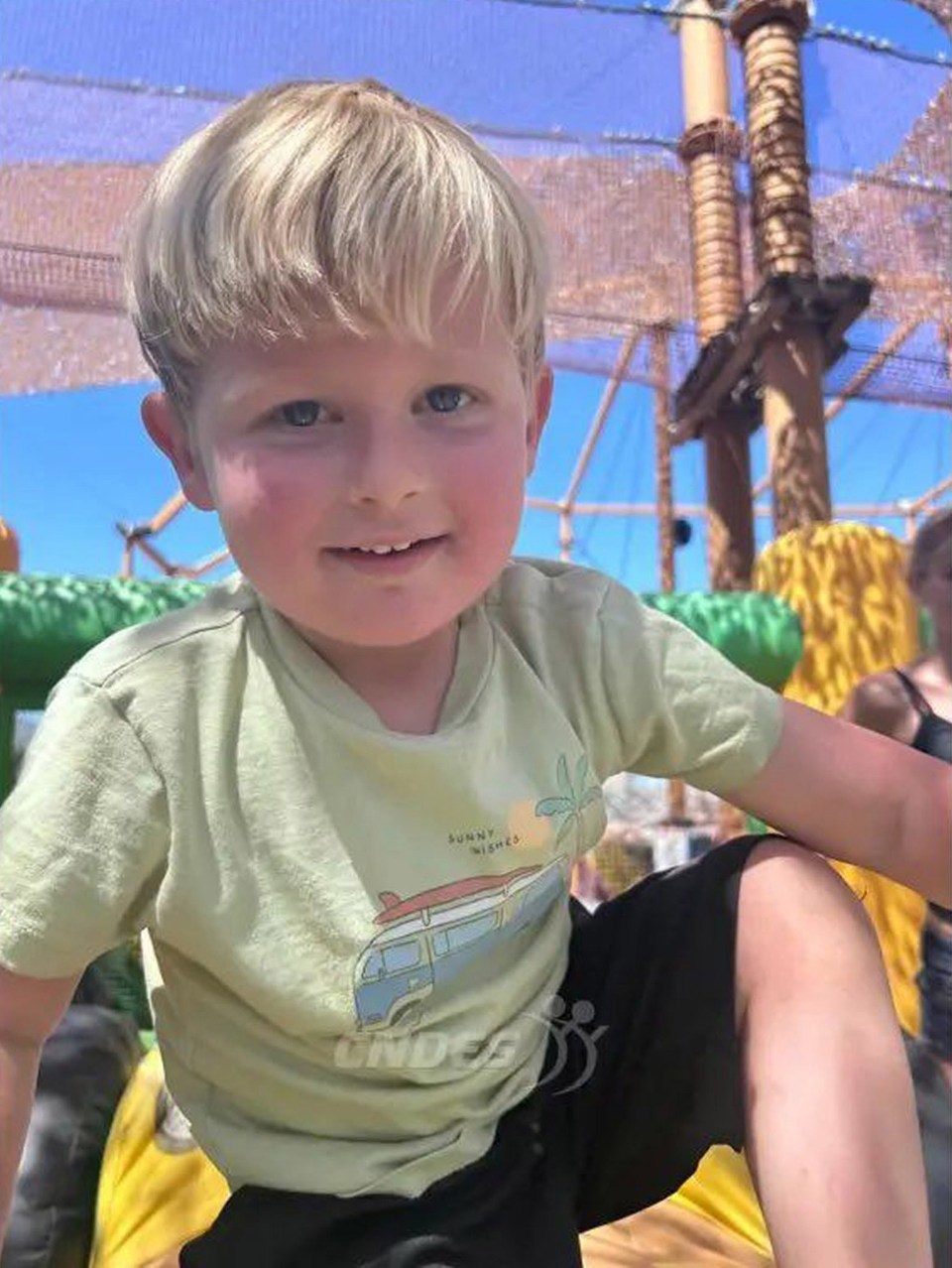
The Disappearance of Thirteen-Year-Old Oliver Pugh
According to The Sun: Representatives from Moscow commented on the case of the missing three-year-old Briton and suspected that his Russian mother may have “abducted” him.
An expert on state television stated that the child is “Russian” and urged the Kremlin to protect the “mother's right” to be with her child.
Enterprise Enterprise Getty
Getty
Latest News about Oliver Pugh
Oliver Pugh disappeared on July 4 from the sight of the police in Marbella. The boy has a British father and a Russian mother, who are currently divorced.
The family lived in Spain, where a court order prohibited leaving the country with the child.
The Spanish police suspect that Oliver may have been taken to Russia, where he would become unreachable for his father.
The Russian authorities have not yet officially commented on whether the child is in the country. A state propagandist, Vladimir Kornilov, remarked on Telegram:
“It is suspected that she has brought her son to Russia. This is of course not yet a fact. But if it really is the case, I think we should do everything to protect the mother's right to be with her Russian child. If London can call him a Briton, why can I not call him a Russian by the same logic?”
He also added:
“How do you determine that the boy is a Briton when his mother may think differently?”
Missing Persons Case and Legal Issues
Oliver is described as a boy measuring 2 feet 7 inches tall, with light hair and distinctive gray eyes.
The national police of Spain is calling on anyone with information to come forward. A spokesperson stated:
“We consider this a parental abduction. We believe that the mother has left Spain and traveled with the boy to her home country of Russia.”
Neither the mother nor the father has been named so far. The Foreign Office “supports the family of the British boy who has been reported missing in Spain.
It is still unclear whether the child has dual Russian citizenship or whether an international arrest warrant has been issued against the mother.
If it is confirmed that Oliver is in Russia, British and Spanish authorities may be powerless in his return. A judge must officially declare the mother a fugitive and request extradition. Russia often refuses to extradite its citizens.
Extradition from Russia to the West
According to Article 61 of the Constitution, Russian law prohibits the extradition of its citizens. This poses a serious difficulty for Western countries trying to achieve an extradition.
Extradition is only possible through international treaties or federal laws; however, Russia does not extradite individuals for political offenses or unnamed acts under its laws.
Such agreements, like the European Convention on Extradition, are constrained by constitutional norms.
Russia and Western countries often have no extradition agreements, such as those with the USA and the UK. Issues of human rights and fair trials further complicate the extradition process.
Western countries frequently deny extradition requests from Russia, citing political motivations and poor prison conditions.
This has led to strained relations and reduced cooperation in legal matters.
Extradition remains largely unilateral; Russia rarely extradites its citizens to the West.
In response, Western countries are becoming increasingly cautious about extraditing individuals to Russia.
Read also