The Last Chief of the Danubian Sich: How Yosyp Hladky Betrayed the Cossacks and Switched Allegiance to Russia.

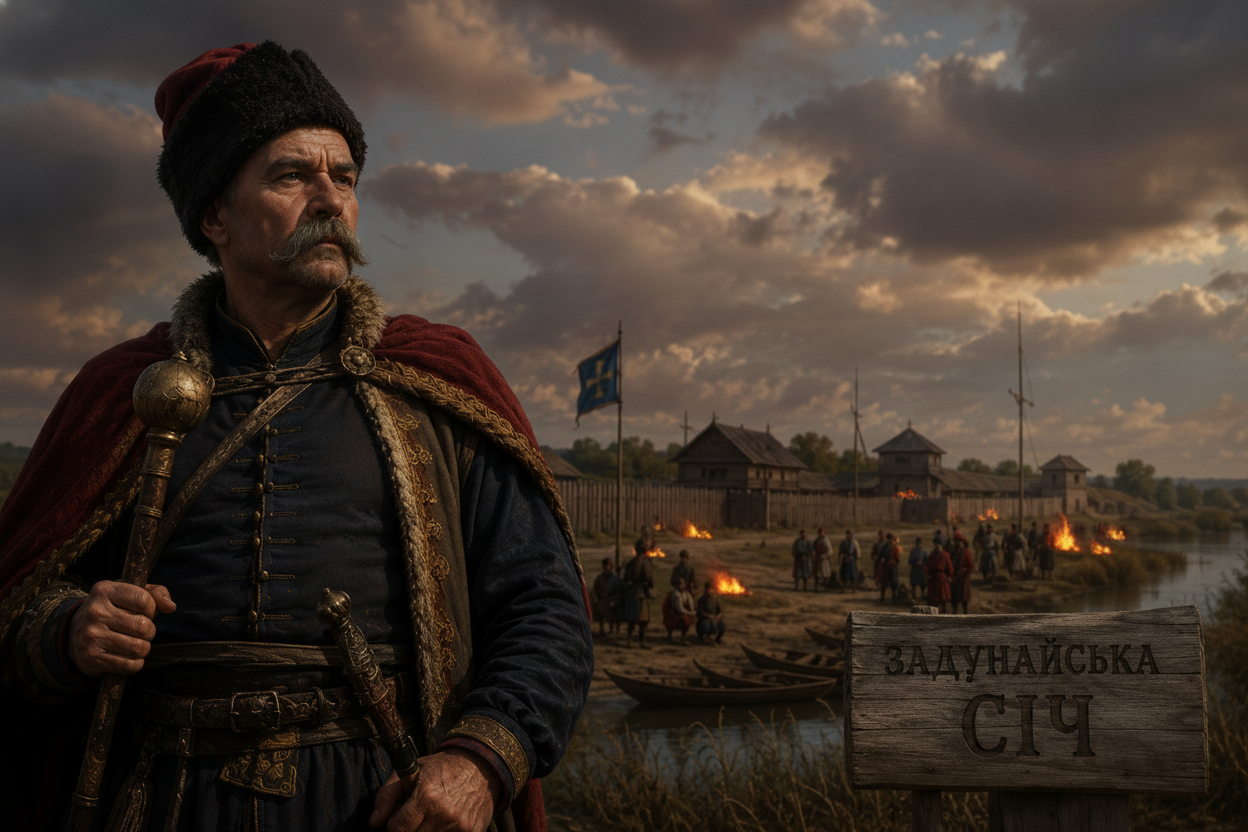
Yosyp Hladky and His Legacy in Cossack History
According to Espreso.tv: Yosyp Hladky, the final chief otaman of the Danubian Sich, left a notable mark on Ukrainian Cossack history, particularly because of his decision to align with Russia and the consequences that followed. The dissolution of the Zaporozhian Sich on August 3, 1775, under a decree by Catherine II, marked a pivotal moment for Ukrainian Cossacks. In its aftermath, the otaman Petro Kalnyshevsky was arrested, signaling the collapse of the traditional Cossack system.
Over the next few decades, Cossack activity shifted to the Danubian Sich, a community that endured for half a century. The exact birth year of Yosyp Hladky is unknown, but he is believed to have been born around 1789 in the village of Melnyky, in the Zolotonosha district of Poltava Governorate. In 1813, he married Feodosiya Mazur, a significant personal milestone.
Military Achievements and the Shift to Russian Allegiance
On May 9, 1828, a group of Danubian Cossacks, along with their leader, sailed on 61 boats toward the Russian shore near Izmail, a decisive move in their transition to Russian control. During the assault on the fortress of Isaccea, Hladky was awarded the Golden St. George Cross and the rank of colonel, reflecting his military contributions. He was granted nobility in 1829, and in 1832, he became the first appointed otaman of the Azov Cossack Host.
Yosyp Hladky died on July 5, 1866, leaving behind a notable legacy in Cossack history and their integration into the Russian Empire. His life and actions illustrate a turbulent era in Ukraine, when the Cossacks struggled to adapt to shifting political circumstances.
The Ukrainian Cossacks' move under Russian authority and Hladky's role in it highlight major changes in power structures and sociopolitical life in 19th-century Ukraine. This period saw profound transformations that shaped the future of Ukrainian national identity and the Cossack movement. Examining these historical events provides deeper insight into the context from which new political realities and societal shifts emerged.
Read also
- Zelensky and Top Military Command Outline Response Plan to Russian Strikes
- EU's New Sanctions Package Targets Crypto Platforms Used to Bypass Restrictions
- New directives for Ukraine's National Security and Defense Council: Zelenskyy assigns tasks to Umerov and Klymenko
- Ukraine Extradites Former Lawmaker Demchak in Major Push to Bring Back Suspects
- EU Adopts 21st Sanctions Package Against Russia: What the New Restrictions Target
- Lithuania Accuses EU Nations of Undermining Sanctions for Their Own Economic Gain