The Failed 1970s Soviet Experiment: Why Circular Apartment Buildings Flopped.

The Soviet Union's Circular Housing Experiment
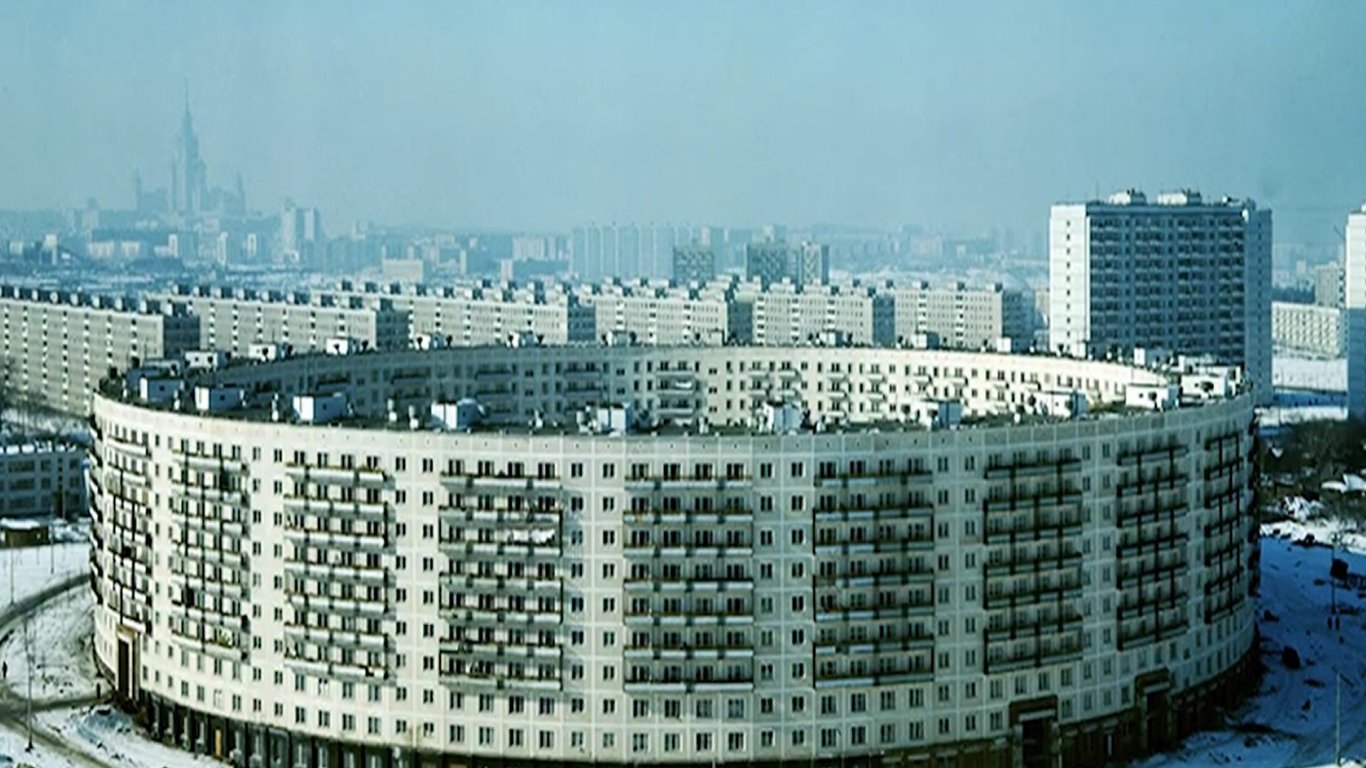
According to Novyny.live: In the 1970s, the USSR embarked on an ambitious architectural experiment: constructing massive circular apartment buildings intended to showcase the nation's technical prowess. This project was part of a broader wave of modernist urban planning during the late Soviet era. However, despite the architects' grand vision, these structures were widely criticized for being impractical for residents, leading to the initiative's ultimate failure.
Among numerous construction projects of the period, the first model of a circular residential building was completed in 1972, containing approximately 900 apartments. The concept was developed by architect Yevgeny Stamo and engineer Alexander Markelov. The original plan called for the construction of five buildings arranged like Olympic rings, but only two were ever realized.
Why the Circular Buildings Were a Flop
A primary reason the project failed to meet expectations was its high construction cost. Expenses ballooned due to the need for custom, non-standard building components, which complicated the assembly process. Furthermore, the buildings were plagued by significant design flaws that made daily life difficult, including:
- A 'stadium effect,' where sound waves echoed off the curved walls, creating constant noise and discomfort for residents;
- Persistent issues with mold and dim lighting inside many apartments, resulting from poor natural light penetration.
Consequently, the circular housing experiment proved unsuccessful, as it failed to meet the basic needs of its inhabitants and did not deliver the promised technical achievements.
This episode illustrates the complex challenges architects and engineers face when implementing unconventional designs, particularly within the constraints of a limited budget and the fundamental requirement to provide comfortable living spaces.
The failure of the circular buildings also underscores a critical lesson for modern developers: the paramount importance of considering end-user needs when pioneering new architectural concepts, a principle that remains relevant in urban design today.
Read also
- Three Ukrainians Without Documents Rescued from Occupied Territories Under Bring Kids Back UA Initiative
- Ukraine’s first underground kindergarten opens in Kharkiv, accommodating 260 children
- Ukraine's ports crippled by Russian strikes: 28 vessels hit, 21 killed
- 24 Children Rescued from Occupied Territories by Save Ukraine, Including Injured 13-Year-Old Anhelina
- Woman Faces Up to 7.5 Years in Prison After Attacking Children for Speaking Ukrainian in Poland
- One of the Most Recognizable Voices on Ukrainian Radio, Journalist Oleksandr, Has Passed Away