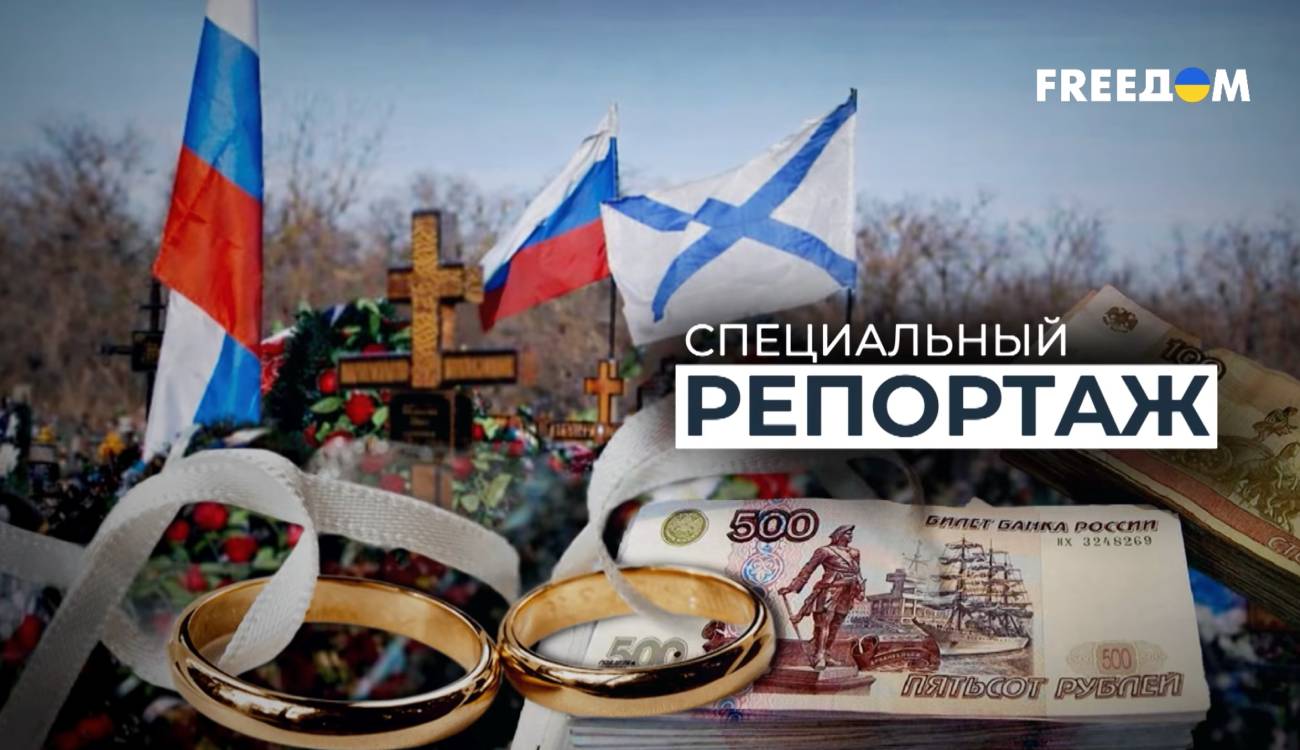
War and Russian Family Values: How Conflict Has Reshaped Marriage and Payouts for the Fallen.

The War's Toll on Russia's Family Structure
According to UATV: Over the past few years, Russia has seen profound shifts in its institution of family, closely tied to the ongoing war in Ukraine. Now in its fourth year, the conflict is reshaping family values, women's financial motivations, and the bureaucratic hurdles widows face. Bronislava Mitina from Novaya Moskva, married for 13 years, has witnessed these changes firsthand. More than a year after her husband was officially declared dead, she still hasn't received a death certificate. While compensation for a soldier's death can reach 5 million rubles as a lump sum, with monthly payments of 200,000 to 300,000 rubles, red tape often blocks access to these funds.
Shifting Attitudes Toward Family Values
Interestingly, the war has also transformed how family values are perceived. Bronislava remarked:
“That was the act of a man—a normal, law-abiding one, not a coward.”This reflects a certain ideal many women now strive for in wartime. Yet other social trends have emerged. For instance, one Russian woman shared: 'It's a shame my guy didn't go; he didn't get killed—I could have made money.' This comment highlights how some women view combat through the lens of financial gain.
Meanwhile, a troubling indifference toward soldiers' deaths has surfaced in society. One widow noted:
“It's like nothing happened. He died, so he died. If I have time for myself, I go to karaoke.”This statement shows how war has become a routine part of daily life, with losses taken in stride. At the same time, Patriarch Kirill has said, 'The family is a school of love. All the skills of human life, communication, love and compassion, mutual support, solidarity—all of this is nurtured in the family.' Yet the realities of modern Russia cast doubt on these ideals.
These changes in family structure are compounded by the absence of legislation on domestic violence prevention, which can worsen situations in households where men serve in combat. In this context, it's worth noting that Russia's children's ombudsman, Maria Lvova-Belova, is raising 10 children—a fact that may also signal evolving notions of family values.
The war has spawned new social phenomena, including a search for partners with military backgrounds. In one conversation, a Russian girl said: 'Mom, you know what—I'll find a guy who'll go to the SMO, he'll die, and I'll get money.' This statement underscores the commercialization of relationships and a shift in moral priorities in contemporary society.
Overall, the war in Ukraine has significantly impacted family values in Russia, driving changes in women's economic incentives and creating new challenges for widows grappling with bureaucratic delays and instability. This is forging a new reality where traditional values are put to the test.
The situation described in the article reflects not only individual tragedies but also broader social transformations taking place in Russian society under the war's influence. Economic hardships linked to bureaucracy and a lack of support for widows highlight the need for reforms in social welfare. Moreover, the evolving perception of family values may signal deeper cultural and identity shifts that demand attention from both society and the state.
Read also
- Poetry, Music, and Remembrance: Honoring Olena Teliha at Babyn Yar
- Population of Donbas Drops by One-Third Over a Decade: Russia's Demographic Devastation
- Two Men Arrested in Poland for Beating a Local Who Defended a Ukrainian Teen
- Teacher Fined in Ukraine for Using Russian in Classroom: Here’s What Happened
- Ukraine's Security Service Dismantles Fake Job Scheme for Draft Dodgers: Hundreds of Exemptions Sold for $5,000 Each
- Volunteer Threatened and Robbed of $11,000: Inside the Attack