Terrible statue of Tina Turner: why bronze statues often turn out to be unsuccessful.


According to Vox: Last month, in Tina Turner's hometown of Brownsville, Tennessee, a bronze statue was unveiled in honor of the late singer.
When celebrities pass away, we strive to leave their mark in memory — often through statues. However, fans of Tina Turner pointed out that this statue looks extremely ugly and does not resemble the beautiful singer. Fortunately, some expressed the opinion that Tina herself would not have been able to see it.
But, unfortunately, we, the living, are forced to look at it.
Strangely, Tina has become just the latest 'victim' of unsatisfactory bronze likeness.
Let’s recall, for example, the 'Scary Lucy' from 2009 in Celoron, New York. This statue was supposed to honor Lucille Ball but ended up resembling a villain from a fairy tale. There's also the notorious bust of Cristiano Ronaldo from 2017, which looks more like a villain than a fan. NBA star Dwyane Wade also has his statue, as does the late actor James Dean.
These unsuccessful statues raise the question: why are there so many of them if they are so bad? Why, despite negative reviews, do they continue to be created? Perhaps we are facing something akin to a conspiracy of sculptors who do not love their heroes? If we want to honor those dear to us, why do we create such unattractive monuments?
Why do so many bronze statues look so terrible?
The criticism of the Tina Turner statue is largely due to the belief that it depicts her improperly. The Tina known from concerts, music videos, and interviews does not match the bronze likeness. For example, the statue's hair looks too large and outdated, resembling a cartoon character. The statue has a silly smile and strange, bony hands that do not resemble human ones.
Alex Ungprateep Flynn, a professor of art and anthropology at UCLA, explains that when it comes to ordering hyper-realistic monuments, difficulties arise due to overly high expectations from people who have their own perceptions of celebrities. Creating a statue that accurately captures the essence becomes a real challenge.
“It’s tough, because if it’s off by one millimeter, it’s like a straight red card,” says Flynn, recalling the nightmarish bust of Ronaldo.
According to Flynn, sculptors often face pressure in meeting deadlines. Since the statue is meant to preserve the memory of its subject, it is vital that it is indeed a quality work. However, this desire to honor legends also leads to haste and increased demand. We want to see monuments faster than the heroes can pass away.
“In the past, people had the kindness to wait until these individuals died,” says Flynn, pointing to various bronze statues in the sports world.
If the creator is trying to reflect Tina's true essence, it is crucial that he does not fall under pressure or timelines set by clients, says Mark Tribe, head of the fine arts department at the School of Visual Arts.
“There aren’t many contemporary artists working in that style who would actually be interested in creating realistic figurative sculpture of a specific person,” says Tribe.
Tribe emphasizes that the issue lies on both sides — the statue clients often demand realism but do not want to compromise the creative freedom of artists.
“This can be called a failure of imagination, a lack of creativity,” says Tribe. “There is a definite correspondence between what you see and what you get, and there is not much complexity between who is depicted and how they are portrayed.”
As a result, instead of discussing Tina Turner’s legacy or her impact on music, everyone talks about whether the statue resembles her. Theoretically, it’s possible that someone will create a new statue of Tina that better reflects her, but this will again lead to similar discussions.
What does 'bad' monument actually mean?
In conversations with experts like Tribe and Flynn, I realized that the terms 'bad' and 'terrible' need clarification. There is a bad in the sense that the statue of Tina looks like a grotesque version of her. And there is a bad in the sense that the monument failed to capture her essence (and even then it didn’t). There is an impression that there was no real attempt to capture anything more than surface traits.
To realize such monuments, risk, perspective, and perhaps an attempt to evoke discomfort in some viewers are needed.
“If you want to create something, and the worst thing people can do is roll their eyes and yawn, you’re making a bronze statue,” says Tribe.
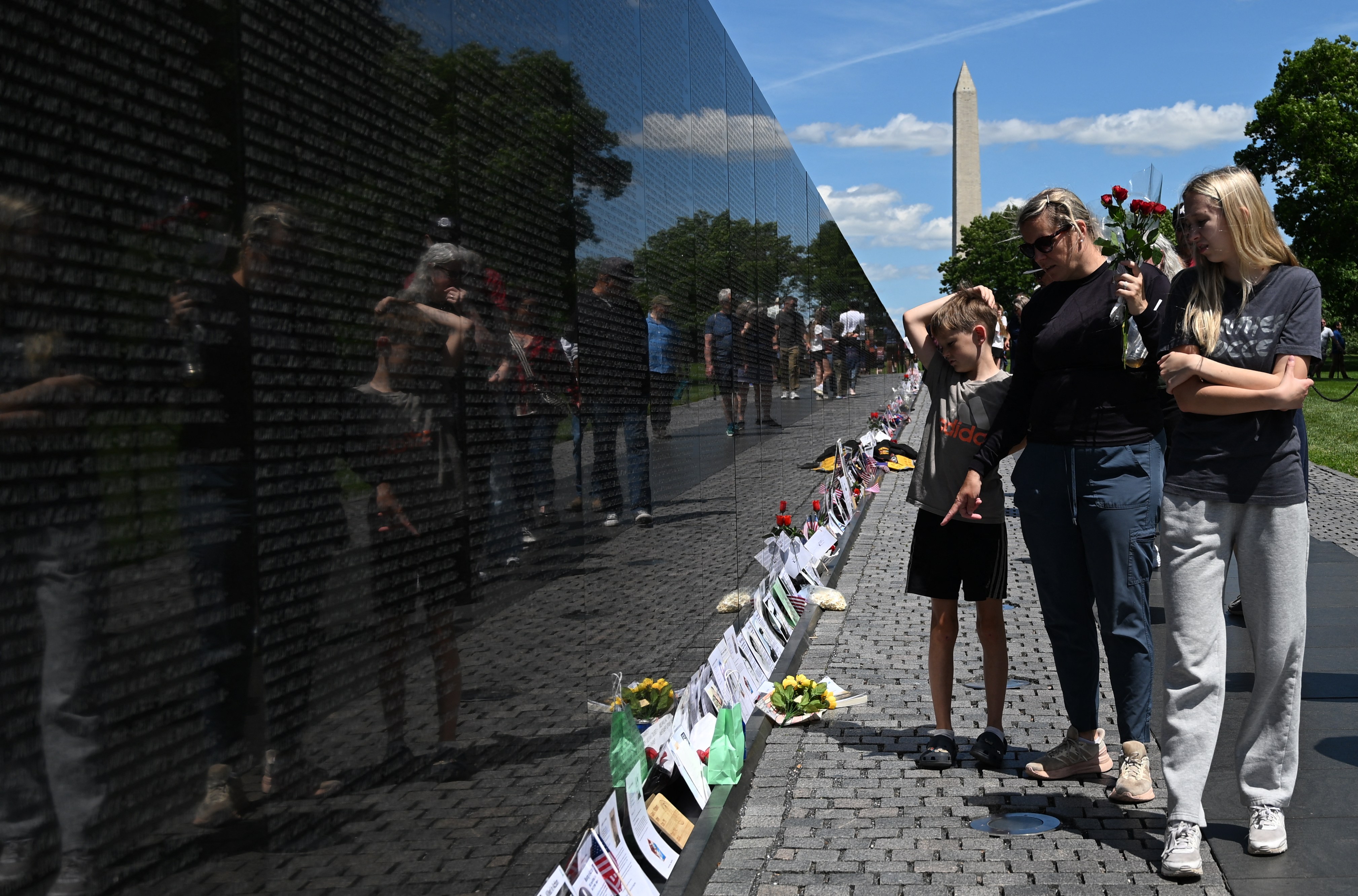
Tribe refers to the Vietnam Veterans Memorial, designed by Maya Lin. Its design — a crack in the earth bordered by two pieces of black marble with the names of the dead and missing — initially sparked controversy due to its lack of obviousness. It was not a traditional bronze statue. A heavy statue of a soldier was added to the memorial in 1984 because people felt uncomfortable.
Flynn also provides a similar comparison, speaking about 'Balzac Monument' by Auguste Rodin. Commissioned by the Society of People of Literature, this sculpture, created after seven years of work, was more abstract, reflecting the interpretation of the novelist and his genius, rather than just physical traits.
“It was just some grand form in a cloak. There was nothing recognizable in it,” recalls Flynn about the reaction when Rodin brought the monument home, as the criticism was harsh regarding the attempt to convey Balzac's genius.
“Now, more than a hundred years later, it’s a masterpiece,” summarizes Flynn. Rodin's model was cast in bronze many years after his death.
Although Rodin, Balzac, and the Vietnam War occurred in completely different contexts, these debates are part of a larger discussion about memory and traditions. How do we want to remember people, and how do we ensure that others remember them too? Should we remind that these themes existed or try to embody their true significance?
The fault of the Tina Turner statue is that it tries too hard to be realistic.
The attempt to recreate the physical likeness of the singer may stem from a desire to have a recognizable monument rather than to capture the essence of her personality.
Of course, criticism can change, as it did with Rodin. Perhaps in the future, the distorted statue of Tina Turner will become a symbol that people will admire in 100 years. Bronze can last forever.
But those who mock it, like Tina Turner herself, are likely not to live to see it.
Read also
- Cristiano Ronaldo Confirms 2026 World Cup Will Be His Last—Spain Matchup Set for July 6
- Portugal Defeats Croatia at 2026 World Cup; Modric Retires from International Football
- Arda Turan, Shakhtar Donetsk Coach, Reveals His Pick Between Messi and Ronaldo
- Harry Kane Shatters Ronaldo’s Record with 70 Goals in a Season and a Win Over Panama
- 2026 World Cup Shatters Records: Messi Becomes All-Time Top Scorer in Tournament History
- Guillermo Ochoa Matches Messi and Ronaldo’s Record: A Sixth World Cup Appearance