The UK Chancellor of the Exchequer is considering new taxes: who will pay billions.

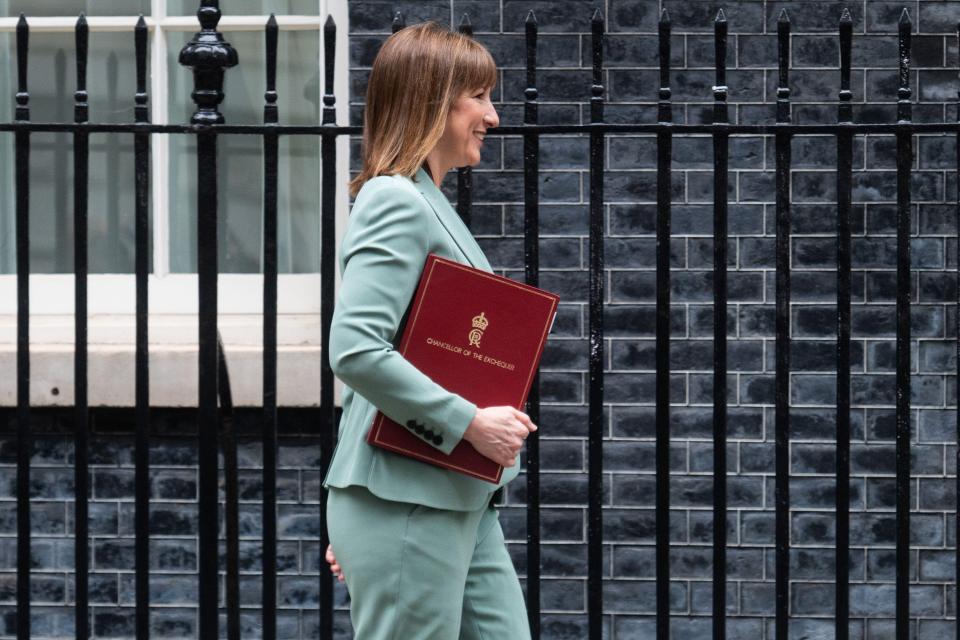
According to The Sun: Experts believe that the Chancellor could rake in tens of billions from tax reforms without hindering 'working people.'
Rachel Reeves is under pressure to fill a £50 billion gap in the public budget ahead of the autumn statement in November.
Rachel Reeves under pressure to fill £50 billion deficit in public finances before the autumn statement in NovemberAlamyRumors are circulating in Westminster about a possible extension of the freeze on income tax thresholds by the Labour Party.
However, critics argue that such a move would contradict the party's promise not to raise taxes on 'working people.'
A new report from the Institute for Fiscal Studies (IFS) advises the Chancellor to avoid 'half-measures' such as simply raising rates.
Instead, the IFS recommends reforming the 'unfair' and 'inefficient' tax system.
Removing capital gains tax relief on death
Reeves may abolish capital gains tax relief on death, according to the report.
When you sell certain assets – such as houses, land, or other valuable items – you are required to pay tax on the profits from their sale.
However, there are important exceptions.
If someone dies and you inherit their asset, you are not required to pay the capital gains tax that you would have owed.
Nevertheless, the IFS believes that Reeves should consider abolishing this relief, which could generate £2.3 billion in 2029-2030.
Families may be unhappy with this move, as the Labour Party has already increased revenue from inherited wealth. The inheritance tax threshold has remained at £325,000 since 2009.
Last year, Reeves announced that it would be frozen until 2030.
Introducing a one-off wealth tax
Economists and politicians have differing opinions on the viability of a wealth tax.
Proponents argue that the richest 1% in the UK owns more than the bottom 70%, and implementing a wealth tax would help reduce this inequality.
However, critics warn of potential administrative difficulties and the risk of millionaires leaving the country, taking their businesses and tax contributions with them.
The IFS believes that if Labour chooses a wealth tax in the budget, it should be a 'one-off' wealth tax.
This would occur through an assessment of individuals' total assets and payment of tax based on the amount exceeding a certain threshold.
"An unexpected and plausible one-off assessment of existing wealth could theoretically be an economically efficient way to raise revenue," writes the IFS.
Doubling the property tax rate for the most valuable homes
A new surcharge on property tax could raise up to £4.4 billion.
Property tax is a local tax on residential properties in the UK, where homes are classified from A to H based on their value.
Categories G and H usually encompass the most valuable homes.
The IFS claims that doubling the tax for these households could yield £4.4 billion.
However, critics consider the property tax system to be 'unfair and arbitrary.'
The essence of the problem is that tax bills do not take into account the current value of your home.
They are based on its value from 1991 when homes were categorized into A to H.
Several years of uneven price growth have caused numerous injustices in this system.
Reviewing inheritance tax
The IFS acknowledges that any changes to inheritance tax could provoke a strong reaction.
However, the report notes that £9 billion annually is a 'modest' sum – although it is high by historical standards.
Reform of the inheritance tax could allow for the removal of an additional tax relief of £175,000, which would significantly bolster budgets – about £6 billion, economists note.
"An obvious option would be to raise the inheritance tax rate from the current 40%," economists emphasize.
There is also the possibility of lowering the threshold at which tax becomes payable.
Currently, individuals can transfer up to £325,000 tax-free.
Combating tax evasion by businesses
Analysts are urging Labour to address the issue of tax evasion.
Corporate income tax has become increasingly important for the state in recent years.
However, tax evasion has led to 15.8% of liabilities remaining unpaid in 2023-24, up from just 8.8% in 2017-18.
This primarily concerns small businesses, as the IFS acknowledges.
"We need to learn more about why so many small companies are filing incorrect tax returns," analysts say.
Notably, some critics believe that any tax increase affecting society, even targeted for inheritance or property tax, will be perceived as a breach of promise.
What actions should the Chancellor avoid?
The personal tax threshold has been frozen at £12,570 since April 2021.
Prime Minister Rishi Sunak announced that the freeze will last until April 2026, and Labour has extended it until April 2028.
Expanding the freeze on personal tax thresholds, including national insurance contributions, could raise about £10.4 million a year from 2029-30.
However, IFS economists believe that Reeves should not do this and instead raise the threshold considering rising inflation.
Continuing the freeze would be a breach of the Labour Party's promise not to raise taxes on 'working people,' including income tax, national insurance, and VAT.
The report’s authors also believe that limiting tax reliefs on pension contributions could generate significant revenues, but this step should be avoided.
Chancellor's assistant Isaac Delestre emphasizes that the Labour Party risks 'falling into a trap,' seeking quick revenue without broader reform.
He noted: 'Virtually any package of tax increases could hinder growth, but genuine reform of the tax system would allow for a reduction in economic losses.'
Read also
- Russia's Fuel Crisis: Government Spins Negative Impacts as Benefits for Citizens
- Water Bills Set to Surge in July 2026: Who Will See Their Subsidies Adjusted
- Up to 500,000 UAH in Compensation for Destroyed Homes: Inside Ukraine’s Housing Recovery Program
- Fuel Crisis Grips Russia as 2026 Refinery Attacks Surge 11-Fold
- Dollar Rises as Euro Declines: What’s Driving the Currency Shift in Ukraine
- Putin’s Approval Ratings Plummet as Russia Faces Record Budget Deficit and Economic Crisis