The longest railway bridge in the UK has been completed: details of the large-scale project.

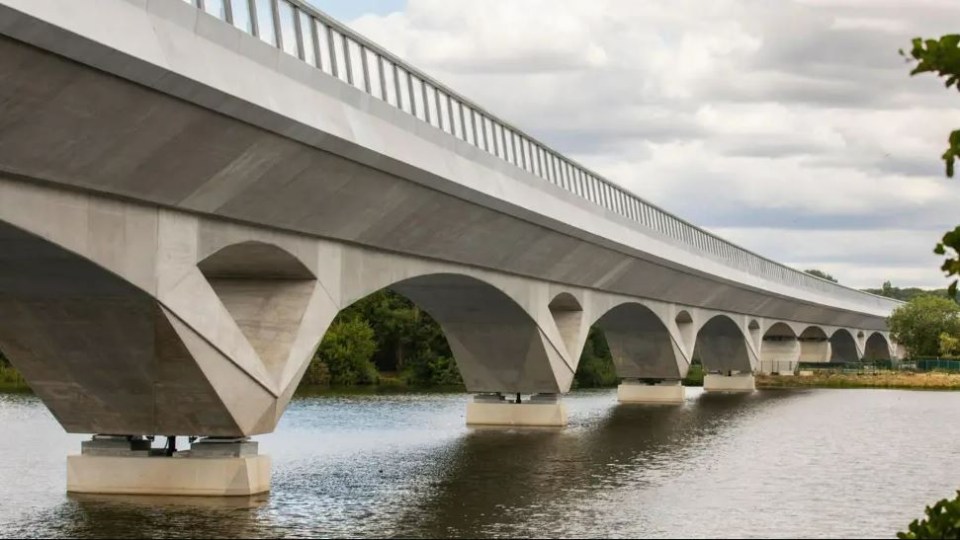
According to The Sun: The largest railway project in the UK has reached an important milestone, completing the construction of the longest railway bridge in the country.
The Colne Valley Viaduct, which spans 2.1 miles near Denham in Buckinghamshire, has been in the making for over ten years — from planning to execution.
The bridge required over a decade of planningHS2 LTDThis viaduct surpassed the Scottish Tay Bridge, built in 1887, becoming the longest railway bridge in the UK.
The viaduct is part of the HS2 project, which costs £47 billion, and it rises 10 meters above ground and water, connecting tunnels in Hillingdon with the Chilterns.
Once completed, high-speed trains will be able to travel at speeds of up to 200 miles per hour.
British Record
The viaduct consists of 1,000 specially shaped platform segments that mimic the landscape near the M25.
Project manager Billy Ahluwalia noted:
“The completion of the viaduct means more than 10 years of planning, design, and construction. It is an outstanding achievement and a structure of international significance that will stand the test of time.”
The contractor Align JV was responsible for the execution of the work.
Teams spent several months installing parapets, noise barriers, waterproofing, and drainage after the last element was put in place in September last year.
HS2 executives assure that the railway will be built 'in the most efficient way' and at 'the lowest reasonable cost'.
This massive bridge has become the latest milestone in a controversial project that has sparked discussions across the UK, yet for engineers, this moment is historic.
What is the project's cost?
Although the Colne Valley viaduct is completed, the overall cost of the HS2 project has already reached a significant sum.
The latest data from Construction Enquirer indicates that by April 2025, £40.5 billion will have been spent.
The remaining amount, £7.2 billion, is scheduled for 2025-26, which will raise total costs to £48 billion.
- £26.4 billion has been spent on civil engineering works, such as tunnels, bridges, and embankments, with expected costs of £5.4 billion this year.
- Stations have cost £2.3 billion, with an additional £600 million yet to be spent.
- Rail systems, such as tracks, signaling, and power supply, have cost £2 billion with an additional £300 million also required.
- £3.5 billion has been spent on indirect costs such as consulting and project management.
- £3.6 billion has been spent on land acquisition.
- Even the scrapped northern section, formerly Phase 2, has already cost £2.6 billion with an additional £100 million remaining.
This means that by this time next year, the project's cost will exceed £50 billion, with a long wait expected before operations commence.
What is HS2?
HS2, which stands for High Speed 2, is a project aimed at creating a high-speed rail network between London and major cities in the Midlands and North of England.
This project is the largest railway investment in Northern England and the most extensive infrastructure project in Europe.
New trains on the HS2 lines will be able to reach maximum speeds of up to 225 miles per hour, which is expected to help reduce travel times and simplify journeys across England.
Last year, former Prime Minister Rishi Sunak made the decision to scrap the section from Birmingham to Manchester.
Now it is hoped that trains will still run to Euston, despite fears that this route may also be cancelled.
More railway news
One of the most beautiful railway routes in the UK is receiving a £15 million upgrade.
The West Highland Railway, recognized as one of the most beautiful in the world, is undergoing a £15 million repair and enhancement phase.
The project involves replacing six miles of tracks and 9,100 sleepers.
Contractor Network Rail has warned of possible disruptions in service. Specifically, between Crianlarich and Fort William, the line will be closed for nine days from November 7 to 17.
Another news story: rail connections may be restored on the island of Jersey, providing direct access from the capital to the airport.
On the largest Channel Island, rail transport has not operated since 1936, but one company is eager to return trains for travelers.
Jersey Western Railway (JWR) aims to restore trains to provide “affordable, convenient, and sustainable transport for Jersey.”
The new route, which partially follows the old narrow gauge, will run from the city capital St. Helier to La Corbière and the airport.
In the long term, JWR plans to introduce a special beach service, a direct route from Trenton Square to Jersey Airport, as well as a steam train.
Free rides are planned for individuals over 65 and those with medical or mobility issues.
The project to restore rail connections on the island of Jersey reflects a growing interest in alternative modes of transport that can enhance accessibility and convenience for locals and tourists.
On a larger scale in the UK, the expansion of railway infrastructure, such as the HS2 project, also underscores the importance of modernizing transport systems to support the growing flow of passengers and freight.
Read also
- Paper Tickets Now Mandatory for Certain International Routes, Ukrzaliznytsia Warns Travelers
- A Hidden 1989 Inscription by Metro Builders at Kyiv’s Golden Gate Station: What Lies Behind the Wall
- Buses from Ukraine to Poland Suspended for 18 Months Due to Repairs at Shehyni-Medyka Border Crossing
- Suitcase delivery to parcel lockers across 8 EU countries launched by InPost – pricing revealed
- Bus Service to Poland via Shehyni Checkpoint to Halt for 18 Months Starting June 15, 2026
- Over 10 Odesa Beach Zones Certified and Ready for Summer Season