The World is Harvesting a Record Crop: Why Hunger Still Exists.

According to Vox: If you are in Battery Park City in Lower Manhattan, pay attention to Vesey Street leading to North End Avenue. You will come across something unusual: a collection of stones, soil, and moss designed to show a connection to the Hudson.
This is the Irish Hunger Memorial — a public art creation that honors the horrific Irish famine of the mid-19th century. It led to the deaths of at least 1 million people and forever changed the history of Ireland, forcing millions of Irish to emigrate to cities like New York.
The Irish famine is a special case, as it is widely commemorated: there are over 100 memorials in Ireland and around the world. Other famines that claimed far more lives, such as the Bengal famine of 1943 or the famine in China from 1959 to 1961, often go unrecognized.
And this should not remain the case. Researchers estimate that since 1870, around 140 million people have died from hunger. Real famines have become increasingly frequent and dangerous. One of the most horrific famines in Northern Europe in the early 14th century took up to 12 percent of the region's population in a few years. Even in years without famine, food availability has consistently remained a significant burden for humanity.
Today, although hunger is still a serious problem, instances of its occurrence have significantly decreased, and the causes are more often related to human errors rather than crop issues. This is a major modern achievement that we often underestimate.
Record Harvest
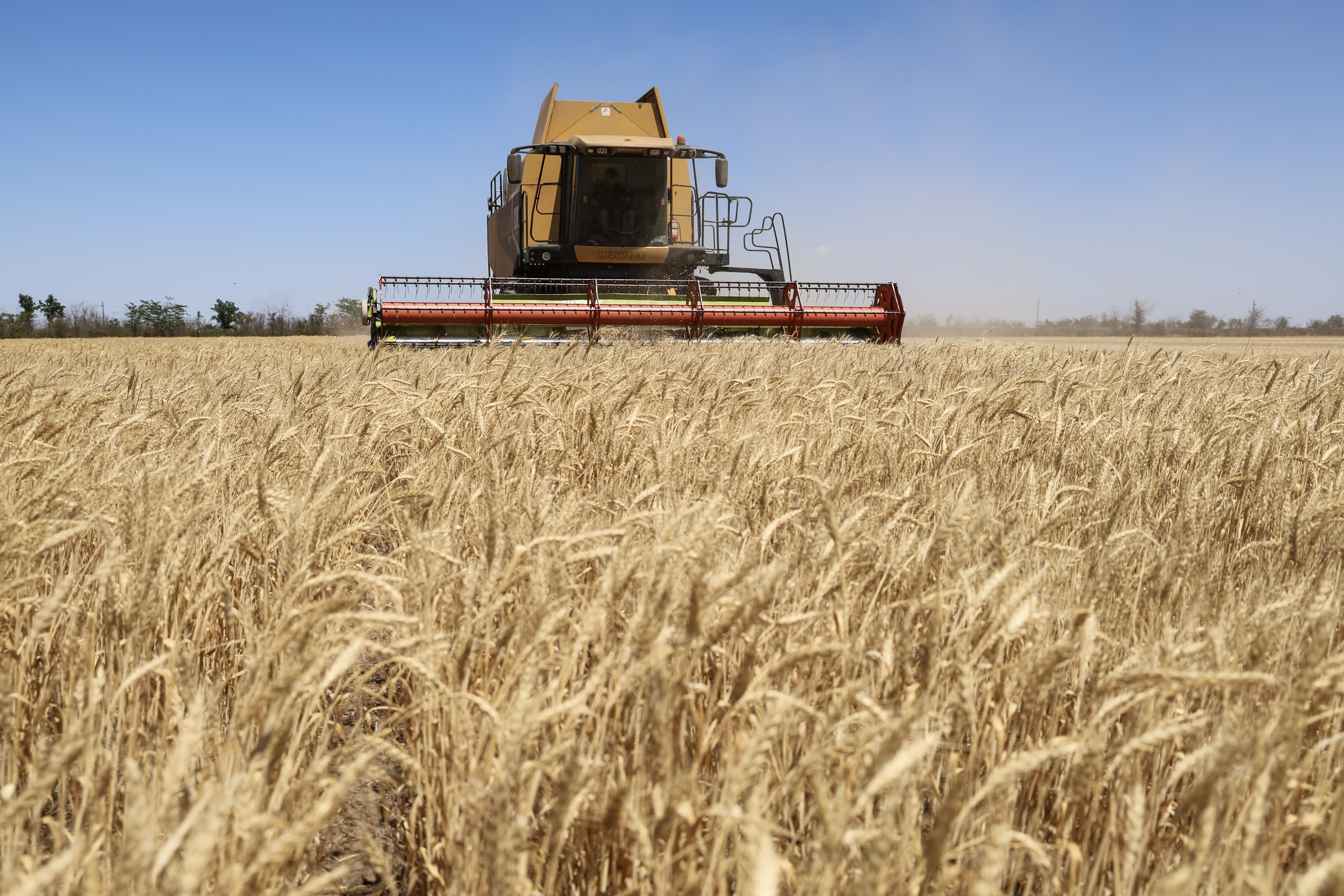
The news gets better: the world is on track for a record increase in grain production this year. The Food and Agriculture Organization of the United Nations (FAO) predicts record levels of global cereal production — wheat, corn, and rice — in the 2025-2026 agricultural season. Another important indicator: the stocks-to-use ratio is about 30.6 percent — meaning the world is producing nearly one-third more staple crops than it uses.
The U.S. Department of Agriculture's forecasts in August also confirm this trend: a record corn harvest, and more importantly — a record yield, or the amount of harvest per acre. This figure is particularly crucial: the more we can grow on one acre, the less land is needed for cultivation to meet global food demand. The FAO food price index, which tracks the cost of an international basket of goods, has risen slightly this year, but remains nearly 20 percent below its peak in the early months of the war in Ukraine.
Looking at the broader picture, the overall improvements are even more impressive. The average number of calories per capita worldwide has been increasing for decades: from about 2100 to 2200 kcal/day in the early 1960s to just under 3000 kcal/day in 2022. Meanwhile, cereal yields have increased nearly threefold since 1961. These two trends — increasing food per capita and higher yields — have helped us step out of the shadow of old Malthusian thinking.
Green Revolution
How did we achieve this?
In agriculture, everything starts with seeds. Short-stemmed wheat and rice from the Green Revolution maximized the use of fertilizers, hybrid seeds added potential for increased yields, genetically modified organisms appeared in the 1990s, and now CRISPR allows farmers to make precise changes to plant genes.
Once you have the seeds, fertilizers are needed. The world previously relied on natural sources of nitrogen, as in the 19th century there was a frantic scramble for guano, but in 1912 Fritz Haber and Carl Bosch developed the process for creating synthetic nitrogen for fertilizers. The Haber-Bosch process is so essential that half of today's food likely depends on it.
Now it's important to add water. Where previously most farmers relied on rain for irrigation, irrigated land has more than doubled since 1961, producing 60 percent of the world's grain harvest, and thus half of the world's calories. Incredibly productive lands, such as California's Central Valley, have become possible due to efficient irrigation.
And finally, it's important to deliver the food to people. Better logistics and global trade have created a system that can move calories from surpluses to deficits when something goes wrong locally.
But this does not mean that the system is flawless — or stable.
Why Do We Still Have Hunger?
Although the world regularly grows more than enough calories, healthy nutrition remains inaccessible for billions. The World Bank estimates that about 2.6 billion people cannot afford healthy food. This number has decreased slightly in recent years, but the situation is worsening in Sub-Saharan African countries.
Today, when famines occur, their causes are usually more political than agronomic. Terrible famines in Gaza and Sudan, where more than 25 million people risk going hungry, are the result of human errors in a world of plenty. (In Gaza, at least, a peace deal finally offers hope for assistance.)
Another threat to progress in the fight against hunger has a political dimension: climate change. While baseline yields and production still show significant resilience to the effects of warming, scientists warn that risks to food security will increase with rising temperatures, especially due to heat, drought, and natural disasters that can strike multiple major producers simultaneously. The good news is that adaptation — smarter agronomy, resilient varieties, effective irrigation — can mitigate losses to about 2 degrees Celsius. However, our capabilities may narrow beyond that threshold.
Another complicating factor arises from trade restrictions. One of the most complicated recent food price crises occurred in 2007 and 2008, when production problems were less significant compared to political ones, as governments limited exports, leading to a sharp rise in prices that particularly hit the poor. This is a troubling precedent, considering the renewed attempts by the Trump administration to impose tariffs and trade barriers.
The Irish Hunger Memorial reminds us of how horrific shortages can be — and how far we have come. After millennia when hunger was the norm, humanity has created a food system that, despite all its flaws, feeds eight billion people and continuously sets harvest records. Despite all the challenges of today and the future, this story deserves to be honored.
This story first appeared in the Good News newsletter. Subscribe here!
Read also
- Three Ukrainians Without Documents Rescued from Occupied Territories Under Bring Kids Back UA Initiative
- Ukraine’s first underground kindergarten opens in Kharkiv, accommodating 260 children
- Ukraine's ports crippled by Russian strikes: 28 vessels hit, 21 killed
- 24 Children Rescued from Occupied Territories by Save Ukraine, Including Injured 13-Year-Old Anhelina
- Woman Faces Up to 7.5 Years in Prison After Attacking Children for Speaking Ukrainian in Poland
- One of the Most Recognizable Voices on Ukrainian Radio, Journalist Oleksandr, Has Passed Away