Why We Eat Turkey on Thanksgiving: The Real Reason Behind the Tradition.


According to Vox: Today tens of millions of Americans will participate in a national ritual, even though many of us derive little enjoyment from it and see little meaning in it. We will consume over 40 million turkeys — animals raised on factory farms that bear little resemblance to the wild birds discussed in the Thanksgiving story. (The original Thanksgiving event may not have involved turkeys at all.) And we will do this despite turkey meat being considered tasteless and unpleasant.
“This is, almost without exception, a dry, depressed chunk resembling sun-baked papier-mâché — a chewy, unsatisfying, and depressingly bland experience,” journalist Brian McManus wrote in Vice. “Deep down, we know this, but bury it under happy memories of past Thanksgivings.”
So, a holiday that fundamentally revolves around a meat dish that brings no real satisfaction contradicts the common notion of why one might refrain from eating meat or at least reduce their consumption: taste biases.
This is indeed important, but I believe the true reason is far more complex, and the tasteless turkey on Thanksgiving only confirms this.
The Inner Essence of This Story
- Why do Americans eat turkey on Thanksgiving even though many find it unsatisfying?
- What kind of life do turkeys have on Thanksgiving?
- What to eat instead of turkey and why you might consider forgoing it more authentic according to Thanksgiving values.
People long for rituals, belonging, and a sense of participation in a larger story — these yearnings peak at the dinner table on Thanksgiving. No one wants to be a social outcast who boycotts the central symbol of one of the most beloved national holidays, highlighting all the tortures that accompany this celebration. What could be more human than to compromise despite the dry meat?
Our instincts for conformity are particularly active when it comes to food, which is the social glue that binds us to our shared past. And while many of us recognize that there is something wrong with meat production, Thanksgiving can seem like a special moment to forget about it for one day.
Many people trying to reduce their meat consumption eat vegetarian or vegan food when cooking for themselves, but during the holidays, they will consume any meat to avoid offending hosts or to sidestep uncomfortable conversations.
But this year I want to invite you, dear reader, to reconsider this logic. If the social and cultural context of food shapes our tastes even more than taste itself, this is where we should focus efforts to improve American eating habits.
“When we eat together, we can really influence broader changes, share vegan recipes, initiate discussions, and revamp traditions to make them more sustainable and compassionate,” said Natalie Levin, a familiar voice on vegan Twitter.
Hundreds of years ago, turkey on Thanksgiving symbolized abundance — a rarity in those times. Today it seems merely a sign of our thoughtlessness and brutality towards animals. On a day intended to embody the best of humanity, better symbols can be found.
Moreover, we don’t even like turkey. Perhaps it is better to skip it this year.
The Grim Fate of Turkeys on Thanksgiving
In 2023, my colleague Kenny Torrella published a study on the conditions in the turkey industry in the U.S. He wrote:
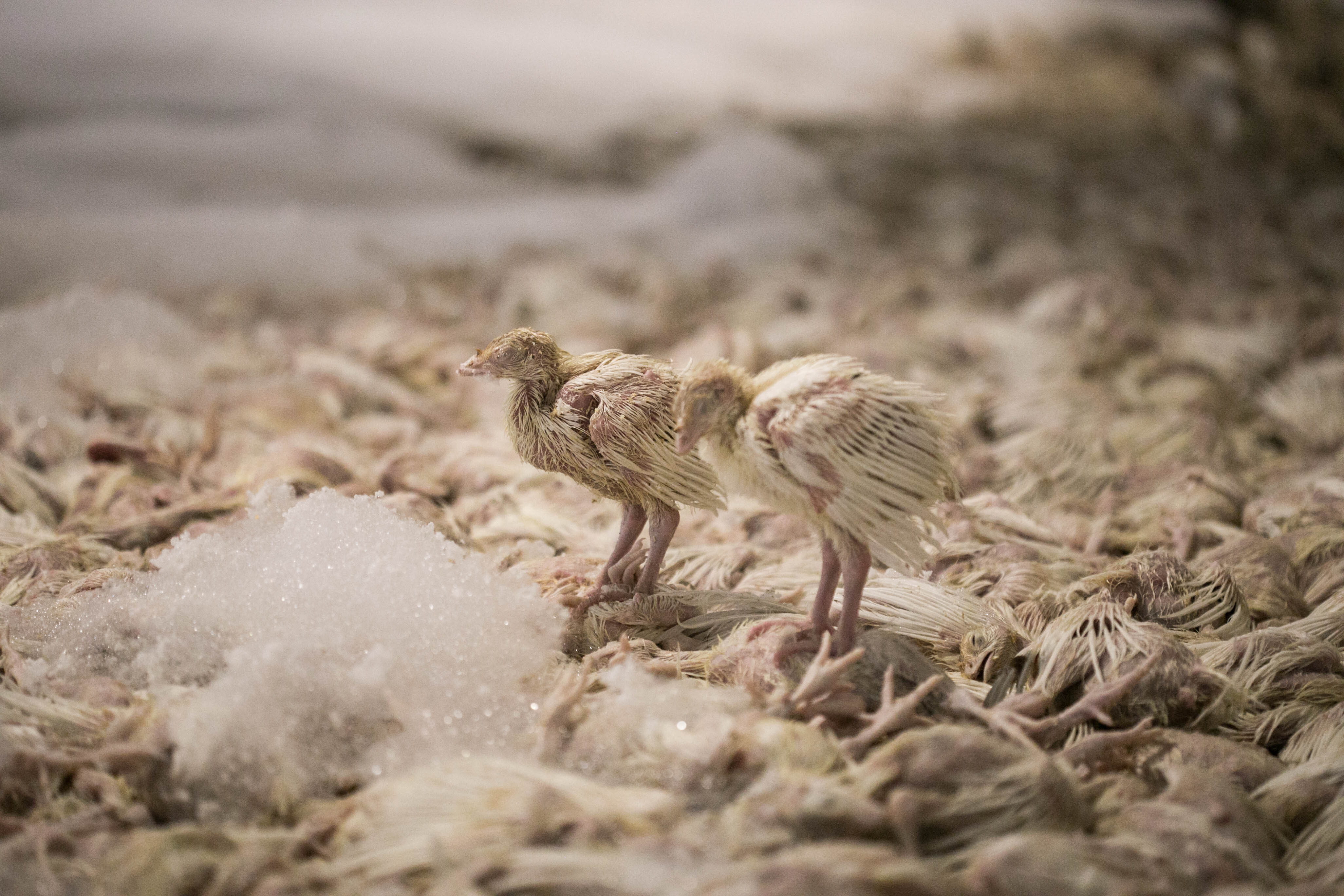
The Broad Breasted White turkey, which accounts for 99 out of every 100 grocery store turkeys, has been bred to emphasize — you guessed it — the breast, one of the more valuable parts of the bird. These birds grow twice as fast and become nearly twice as big as they did in the 1960s. Being so top-heavy, combined with other health issues caused by rapid growth and the unsanitary factory farming environment, can make it difficult for them to walk.
Another problem arises from their giant breasts: The males get so big that they can’t mount the hens, so they must be bred artificially.
Author Jim Mason detailed this practice in his book The Ethics of What We Eat, co-authored with philosopher Peter Singer. Mason took a job with the turkey giant Butterball to research the book, where, he wrote, he had to hold male turkeys while another worker stimulated them to extract their semen into a syringe using a vacuum pump. Once the syringe was full, it was taken to the henhouse, where Mason would pin hens chest-down while another worker inserted the contents of the syringe into the hen using an air compressor.
Workers at the farm had to do this to one hen every 12 seconds for 10 hours a day. It was “the hardest, fastest, dirtiest, most disgusting, worst-paid work” he had ever done, Mason wrote.
In the wild, turkeys live in “small groups of ten or more, they know each other, communicate as individuals,” Singer, author of Consider the Turkey, says. “The turkeys sold on Thanksgiving never see their mothers, do not search for food… They suffer trauma when surrounded by a thousand unfamiliar birds that they cannot recognize as individuals,” crammed together in overcrowded conditions.
From birth to death, the life of a factory-farmed turkey is marked by violence, including mutilation of their beaks, toes, and soft parts, a grueling journey to the slaughterhouse, and a killing process where they are roughly grabbed, hung upside down, and sent down a fleeting conveyor belt for slaughter. “If they’re lucky, they’re stunned, and then a knife cuts their throat,” Singer noted. “If they’re not lucky, they miss stunning, and the knife cuts their throat while they’re fully conscious.”
On Thanksgiving, Americans waste the equivalent of more than 8 million turkeys, according to ReFED, a non-profit that works on reducing food waste. And this year, Thanksgiving celebrations take place against the backdrop of an avian flu outbreak, resulting in tens of millions of chickens and turkeys on infected farms being destroyed by brutal methods.
Returning to a Real Thanksgiving
When I search for words to describe this horrifying situation, I can only call it a religious term — desecration — of our planetary abundance, humanity, of life itself. On any other day of the year, this looks quite disgusting. And on a holiday that should symbolize our gratitude for the blessings of the Earth, you can understand why for many vegetarians and vegans, Thanksgiving is often seen as the most alienating day.
I also belong to this group, though I do not hate Thanksgiving. I have learned to love it as a holiday that is subject to creative repurposing. I usually spend this day preparing an array of plant-based dishes (which most people consider “side” dishes, though they can be made main).
I’ll name a few: mushrooms in jelly, creamy pumpkin filling, baked lentils with cashews, a bright autumn Brussels sprout salad, roasted red cabbage with nuts and feta (can be replaced with dairy-free cheese), mushroom soup without shellfish (I add plenty of white beans), challah for rolls, pumpkin-miso tart, which makes the holiday even more intriguing than any pie for Thanksgiving, and rasmalai, a Bengali dessert whose flavor combinations are well-suited for the holiday.
Vegan turkeys can be completely optional, though some of them have become quite good — I enjoy Gardein's crispy vegan turkey and Field Roast's chestnut cranberry. You can also make your own.
The hardest part about forgoing meat is not the food (if it were so, it might be easier for Americans to give up dried turkey). “It’s about the uncomfortable truths and ethical dilemmas that arise,” Levin said, summing up the strange dissonance between celebrating joy and the consequences of mass production.
These conversations are not easy, yet they are deserving of attention. We should not be afraid of losing the rituals that define us as Americans. Culture is a continuous conversation about what we hold dear, and any culture that does not change is dead. There is a much greater significance in adapting traditions that no longer align with our values. We can start with Thanksgiving.
Read also
- Ukraine's ports crippled by Russian strikes: 28 vessels hit, 21 killed
- 24 Children Rescued from Occupied Territories by Save Ukraine, Including Injured 13-Year-Old Anhelina
- Woman Faces Up to 7.5 Years in Prison After Attacking Children for Speaking Ukrainian in Poland
- One of the Most Recognizable Voices on Ukrainian Radio, Journalist Oleksandr, Has Passed Away
- Crimean Tatars Reclaim Their True History: How Valery Vozgrin’s Work Dismantles Russian Myths
- Ukraine's Birth Rate Drops 16%: Deaths Outnumber Births by Three to One in First Half of 2026