Fake Service Dogs: Why They Threaten the Rights of People with Disabilities.

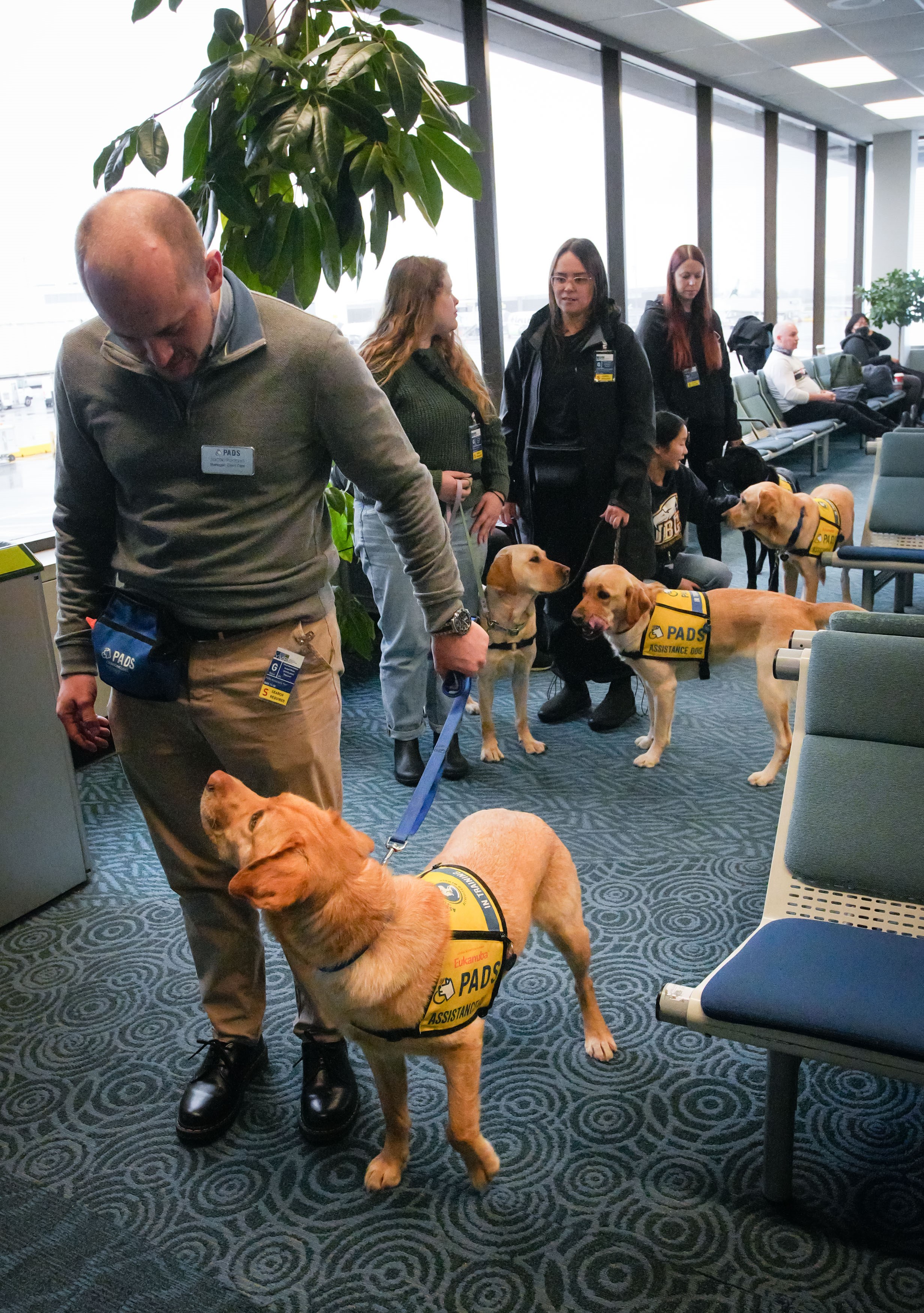
According to Vox: Recently, many Americans, including myself, have been actively traveling during the holidays. During my flight from New York to Los Angeles, I noticed a dog in a 'service dog' vest barking at me near the exit. This dog, resembling a pug, was pacing back and forth and trying to attract the attention of other travelers.
On my return from LAX, I saw even more service dogs — a dachshund, a French bulldog, and several mixed breeds waiting for check-in with their owners. This made me wonder how many dogs are traveling under this status and whether all of them are truly well-trained service dogs. Sometimes their behavior raised doubts, and I suspected that some of these dogs might be fake.
Key Takeaways
- The number of Americans taking dogs on flights as service animals is increasing, and many are using this opportunity — meant for people with disabilities — as a loophole to travel with their pets.
- The problem is that untrained dogs can create discomfort for other travelers and also hinder real service dogs from performing their important duties.
- The lack of clear regulations leads to abuses of the system, and it’s difficult to impose strict rules without interfering with the needs of individuals with disabilities.
Of course, during the holidays when many people are traveling, such dogs are easy to spot. But you are not alone in your observations of the increasing number of suspicious service dogs. This raises a number of questions.
Why are there so many? How many people own them? Is certification really that simple? Do so many people actually need service dogs? Why is one barking at me? Are people simply wanting to take their dogs on trips? Does this make me a bad person for suspecting some of them? Is a fake service dog really that bad?
Unfortunately, I was unable to speak with an actual service dog to learn their thoughts on this contentious topic. However, I was interested in the opinions of experts, crew members, and service dog trainers who shared how impostors complicate their work and the work of real service dogs.
Traveling with Dogs is Hard, and Services Are a Loophole
More people want to travel with their pets, but despite airlines' assurances of safety, owners still worry about transporting animals in the cargo hold. They also realize that transporting a dog can cost a considerable amount and be a real ordeal.
Traveling with a dog in the cabin in the U.S. is quite complicated due to the number of rules. Officially, dogs must be placed in an approved carrier that fits under the seat in front of you. They must also be able to turn around in the carrier and remain securely closed for the duration of the flight. If the dog meets all these requirements, transporting it on most major U.S. airlines will cost around $150 per leg of the journey.
Many people want to keep their dogs with them during travel, and this usually concerns small breeds. Even then, not every small dog will be comfortable being in a cramped carrier. Surprisingly, some people still find ways to bypass the system.
“I think many people are starting to take advantage of the fact that we really want our dogs to be with us,” says Jessica Reiss, director of the Canine Companions program, an organization that trains and provides service dogs to people with disabilities.
At Canine Companions, Labradors, golden retrievers, and their mixed breeds undergo a six-month training program covering about 45 tasks, including opening and closing doors, responding to signals, assisting with wheelchair movement, and identifying objects. Recipients of service dogs also undergo an intensive training program.
“To provide a dog to a person, they come to us and stay with us for two weeks. They literally live with the dog 24 hours a day — learning the dog’s behavior, body language, how to respond to fear, like a regular dog owner,” says Reiss, listing just a few aspects of the training participants undergo during these 14 days.
Although training at Canine Companions is rigorous, similar programs are not the standard. Part of the problem is that there is no single standard.
Reiss noted that the Department of Transportation has attempted to limit travelers who abuse the ability to travel with pets (for example, by banning emotional support animals) and made the requirements for service animals appear tougher, yet people still find ways to circumvent these restrictions.
“There’s a loophole that allows private training of their dogs for service, meaning the dog must perform tasks that mitigate a person’s disability,” explains Reiss. While private training may seem more accessible, it also leads to abuses due to the lack of regulation.
“There are many owners who train their dogs, teaching them to perform actual physical tasks, and they should get access. But we’re also talking about people who just don’t want to leave their dogs at home,” Reiss noted.
This leads to confusion and a lack of consistency. As a result, you get dogs, like the barking French dog in a service vest, who have the same rights to fly as a dog that has been trained by Canine Companions. This also explains why there are so many inconveniences with misbehaving “service dogs” on planes (and on land).
I spoke with several American flight attendants who confirmed that they have noticed an increase in the number of service dogs on flights. They noted that they are instructed not to question the owners, even if they have suspicions about noisy puppies. One flight attendant, who chose to remain anonymous, said: “Of course, that elderly chihuahua isn’t saving anyone’s life… but it’s not my job to check that.”
This complicates the situation further, as no one wants to come off as someone who questions a person with a disability. How do you distinguish real service dogs from those who are slipping through loopholes without making someone feel attacked or dehumanized?
Who Fake Service Dogs Really Harm
As a dog owner who fits under carry-on regulations, I have fewer advantages than those abiding by airline rules. Following all the requirements for transporting dogs is more expensive (service animals fly for free) and complicates the flight (being in a closed crate instead of sitting on the cabin floor or on the owner’s lap). If the 'correct' way to take a dog on board is so unreliable, and the unrealistic option turns out to be easier and free, why follow the rules?
“That’s the problem — the rules really don’t matter,” says Molly Karp, a woman with cerebral palsy who has a service dog named Slate. “I find myself in this same situation half the time. I’m trying to understand why I paid $50 for a vet visit to fill out that form? That person just walks in with their dog.”
Karp stated that she travels two to three times a year and has recently noticed an increase in the number of service dogs, especially over the last three to five years. Slate, whom she received through Canine Companions, is her second service dog, and they recently traveled from Connecticut to Wisconsin, with a layover in Chicago at O'Hare Airport.
“There were so many dogs at that airport that getting from our gate to the next was a real challenge,” she recounts, adding that several dogs were trying to interact, barking and approaching Slate. Although Slate is trained to stay focused, external distractions make it hard for him to assist Karp during critical moments. Karp, who uses a scooter and walkers, explains that this also creates extra stress for Slate.
“If I go somewhere with friends, I often don’t take him with me, because it might cause more stress. If I know there are many people around who can help me as much as he can,” Karp says.
Karp also often worries about where she sits on the plane. In her experience, people with disabilities and service dogs are usually seated in sections at the front of the cabin. Hypothetically, if there are several people with service dogs, who gets that spot? And will there be several dogs in one row?
Karp’s doubts about traveling with her service dog highlight the lack of rules that are meant to assist her and other people with disabilities. She also noted that she often has to build barriers due to people’s questions about whether her dog Slate is really a service dog, likely due to their previous experiences with unruly dogs and people abusing these privileges. But if people don’t know anyone like Karp, it’s hard for them to understand how their actions can affect those who truly need assistance.

For a long time, Karp believed that educating the public about the medical necessity of service dogs would solve her problem. But over time she realized that increased awareness is pointless if people are not willing to listen. And while Karp hopes for legislative changes, finding solutions to the service animal problem without harming those who need them remains a challenging task, as many people abuse the system.
“I don’t know what such legislation might look like, but perhaps something that deters people from abusing it might help real people who need service dogs,” Karp says. “It’s about recognizing that they are a medical necessity.”
Perhaps the biggest barrier is sheer selfishness. It’s hard to put the interests of others first, especially during a flight, considering traveling with one’s dog to be sufficiently safe. In that moment, no one thinks about the social contract or how their dog might affect someone else in the future. Teaching someone to show that kind of empathy is a challenge even a service dog cannot accomplish.
Read also
- Three Ukrainians Without Documents Rescued from Occupied Territories Under Bring Kids Back UA Initiative
- Ukraine’s first underground kindergarten opens in Kharkiv, accommodating 260 children
- Ukraine's ports crippled by Russian strikes: 28 vessels hit, 21 killed
- 24 Children Rescued from Occupied Territories by Save Ukraine, Including Injured 13-Year-Old Anhelina
- Woman Faces Up to 7.5 Years in Prison After Attacking Children for Speaking Ukrainian in Poland
- One of the Most Recognizable Voices on Ukrainian Radio, Journalist Oleksandr, Has Passed Away