The Murder of Charlie Kirk: How the Youth Conservative Leader Changed Politics for Generation Z.

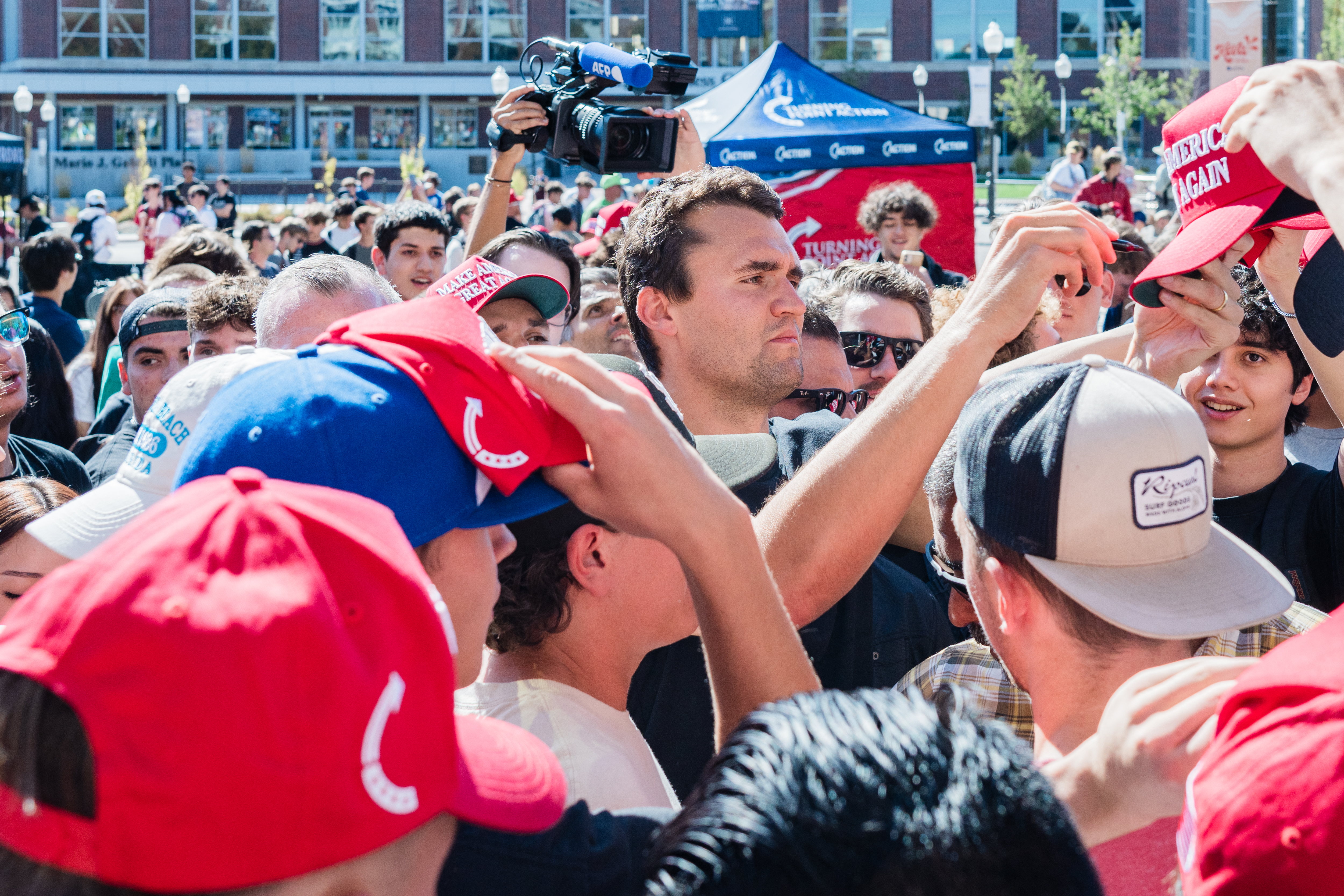
According to Vox: In the hours and days following Charlie Kirk's passing, many people, especially young people, expressed their sadness and shock on news feeds, Instagram stories, or TikTok streams — and it came as a surprise.
These were not just die-hard conservatives or loyal Trump voters, but seemingly apolitical individuals: classmates and friends from his hometown who previously hardly wrote about current events — until this moment. For liberals or people in their 30s, this might have seemed unexpected.
However, these reactions are only one manifestation of Kirk's influence and how his movement and style of politics may continue to live on after his death.
Kirk became a figure who redefined how politics, political media, and Generation Z culture work for his supporters, allies, and political opponents.
1) He redefined conservatism, creating a new generation of leaders and groups
For conservative Generation Z, Kirk achieved almost mythic status: he went from an obscure teenager — the founder of a small activist group — to a conservative king by the age of 31.
He became indispensable to the Republican Party. President Donald Trump was re-elected last year with unprecedented support from young voters, something Republicans had not received since the 2000s. Kirk is considered a key figure who helped make this happen through his nonprofit organization, particularly by working with passive or alienated young men.
Kirk's organization, Turning Point USA, started in 2012 as a small group trying to establish itself on college campuses. In its first year, it gained about 9,200 followers on Facebook, 15 campus chapters, and 40 bloggers.
By the 2020s, Turning Point had effectively become the “youth division of the Republican Party,” as noted by Generation Z writer and consultant Rachel Yanfa. It is a massive national network with over 800 college chapters, millions of social media followers, and nearly $100 million in funding in 2024, which also supported other right-wing youth-focused organizations.
Before the emergence of Turning Point on campuses, “you had shell organizations like College Republicans and Young Republicans that had no significant impact, and Turning Point became the cool new organization,” — Joe Mitchell, a 28-year-old former Iowa state representative mentored by Kirk, told me. “People genuinely wanted to attend their events, and you didn't have to ask people to come.”
Kirk also funded the launch of Mitchell's nonprofit organization, Run Gen Z, aimed at electing young conservatives to local and state offices. He provided mentorship and a platform for an entire generation of young conservative activists.
But Turning Point also changed the perception of conservatism on campuses — turning it into a core cultural identity, not just political beliefs.
“Every new popular speaker on the conservative circuit was trying to be at a Turning Point event.”
Joe Mitchell, founder of Run Gen Z
“He absolutely changed the game in terms of the culture of what is cool and what people wanted to be part of. This had a huge impact on the perception of the conservative movement over the past few years,” — Mitchell noted. “It became much more culturally appealing because people were inspired by it. … And it wasn't always old boring white people. … You would go to Turning Point events and see LGBT Republicans, Black conservatives, Jewish coalitions.”
By combining annual summits for young leaders, women, and Jews, as well as the joint annual Turning Point conference, young conservatives gained new platforms for meeting on campuses and at national events with elements of stylish festival production and political stars.
“Don. J. was there, Tucker Carlson was there, the president was there — every new popular speaker on the conservative circuit was at a Turning Point event,” — Mitchell added.
This new appeal extended beyond the political arena: it also influenced mainstream culture, contributing to the sense that society as a whole is shifting rightward, as Yanfa noted.
“Republicans were very successful in politically encoding culture [in the 2020s] — that was Charlie,” — she said. “You see athletes, celebrities, and others starting to express their opinions, and I don't think that would have happened with anyone else. He was unique in this regard because he had those connections, and he was respected for his actions in the cultural context.”
2) Kirk understood — and exploited — the new attention economy
Kirk’s mastery of social media was another one of his advantages. He changed the way political debates and discussions spread while building a personal brand that transcended his supporters and entered the mainstream.
It is no exaggeration to say that both his supporters and critics developed parasocial connections with him, like with a star or artist. He was easily recognizable, his voice resonated constantly in the online space, whether in videos showcasing his views or counterarguments from political opponents. And he was so well-known that he was even parodied on television shows like South Park.
“I heard from many people after his killing that they felt like they knew him, even if they had never met,” — Yanfa noted in conversations with young people this week. “That is rare. That feeling usually arises with celebrities, athletes, or other public figures. But for a political figure who can attract such attention — that is incredibly hard to achieve.”
This was driven at least in part by how quickly he adapted to changes in the political and social media ecosystem, using short, impactful podcast clips, personal conflicts similar to those that arose during his murder, and long debates in the format of “1 progressive teenager vs. 20 Trump supporters,” which became viral.
“Many of his most viral videos are personal meeting videos, debates — those are the things that became popular,” — Yanfa emphasized.
This sense of interpersonal connection enhanced the closeness between his audience and himself, altering the approaches of other conservative and liberal influencers to content dissemination.
“He surpassed Jesse Watters, Tucker Carlson, and Ben Shapiro, becoming the best,” — Mitchell remarked. “He reached many different demographics and age groups.”
It wasn't just that Kirk had a podcast, a youth organization, or a faith-based program, Mitchell stressed. What's important is that he developed a network of young conservative influencers, such as Candace Owens, Benny Johnson, and Alex Clark, that not only met the media needs of young conservatives but also offered ideals that some young conservatives aspired to embody.
3) He connected with the new countercultural movement on campuses and among youth
Kirk also understood the characteristics of Generation Z — a generation that is simultaneously more progressive and more Republican than young people in the recent past.
Central to this is the denial of the establishment. As mainstream America became more progressive in the 2010s, the refusal of some young people to accept the status quo and distrust in established institutions created a counterculture among the new youth. This led to openness to debate and critical reflection, making young people more receptive to conservative appeals over the last five years.
“After this incident, I continue to hear from young people that they may not agree with everything he said, but they respect the fact that the debates happened at a time when young people are emphasizing free speech,” — Yanfa shared.
She noted that part of the disillusionment among young people towards the status quo from older leaders and generations, including university administrations, politicians, or other activists, is this sense that “they are afraid to touch certain topics.”
Kirk spoke about everything, “and that was impressive in what he did because it really raised important questions. He understood that people wanted to have those controversial conversations.”
The fact that Kirk mirrored controversial or even biased opinions did not deter young people — even those who were his opponents. His brand of free speech provided a platform for debates, inviting people not only to agree but also to improve their arguments.
This style of debate emerged at a time when Generation Z did not want to be defined in strict ideological or partisan categories.
“Young people don't want to be boxed in on one side or the other; they have nuances in their beliefs, can take something from one viewpoint and something from another, and want to hear their positions challenged,” — Yanfa emphasized. “Kirk created space for that opportunity, and much will be lost.”
Read also
- Trump Approves Nuclear Deal with Saudi Arabia, Allowing Enrichment Without IAEA Oversight
- Pentagon Requests $67 Billion More as US War Costs Against Iran Hit $37.5 Billion
- Iran Faces Infrastructure Bombing Under New US Strategy Announced by Trump for Strait of Hormuz Attacks
- Ukraine’s Air Defense Gets a Boost: New Interceptor Missiles for Patriot Systems Discussed with NATO
- Putin Abandons Plans to Return Occupied Lands to Ukraine: What We Know About the So-Called 'Buffer Zones'
- Trump Endorses FIFA's Ban on Balogun and Backs New UN Secretary-General Pick