Philip Pullman concludes his new trilogy: why his books were deemed dangerous.

According to Vox: Philip Pullman's trilogy 'His Dark Materials' became one of the most beloved children's book series of the 2000s, but at the same time often faced criticism and bans. Gruesome, philosophical, and decidedly controversial regarding traditional Christian doctrines, this series evoked considerable resonance and religious boycotts.
This week, Pullman presented The Hidden Roses, the concluding volume of the 'Book of Dust' trilogy, which is a continuation of 'His Dark Materials'. (The first book takes place 11 years before the events of 'His Dark Materials', and the next two follow eight years after.) In the new series, the conflict begins with books that prove to be as dangerous as Pullman's critics claimed.
Lyra, the main character, falls in love with two books by contemporary philosophers who promote moral relativism, claiming that nothing is real, and nothing makes sense. Under their influence, Lyra drifts away from her daemon Pantalaimon, who accompanies her in all matters, meaning that in Pullman's metaphysical constructs, she moves further away from her soul.
Paradoxically, religious conservatives previously claimed that 'His Dark Materials' endangered children's souls. The series, conceived as Paradise Lost for teenagers, metaphorically condemns the Catholic Church for child abuse and concludes with two children literally killing God, saving the multiverse, and falling in love with each other. In 2008, the series ranked second on the list of the most banned books in the U.S. Planned film adaptations of the series were halted after only one release in 2007, partially due to pressure from the anti-discrimination group the Catholic League.
Pullman does not hold back his thoughts on religiously motivated censorship:
“Religion gives its followers evil, intoxicating, and morally corrosive sensations,”he wrote in 'The Guardian' in 2008.
“The destruction of intellectual freedom is always evil, but only religion does it so pleasantly.”
Pullman's new series does not call for censorship. However, it clearly demonstrates his probable existence of dangerous books and ideas that can distance us from our fundamental essence.
“Narnia Books – an invaluable guide in the world of unfathomable evil”
In a sense, the whole story begins with the danger of a bad book. Pullman's books 'His Dark Materials' were written as a response to C.S. Lewis's Christian allegory 'The Chronicles of Narnia'.
According to Pullman, Lewis's books are “religious propaganda.” He believes they instill in children values that they should be taught to hate.
“It is massively demeaning for girls and women,”Pullman noted at the Hay Festival in 2002.
“It is openly racist. One girl ends up in hell because she was interested in clothes and boys.”
Lewis's characters always stayed outside conflicts, while the boys armed themselves with swords and fought to the death. Susan Pevensie, according to Pullman, is declared “no longer a friend of Narnia” and cannot go to heaven with her family at the end of the series, as she “is now only interested in stockings, cosmetics, and parties.”
However, what outraged Pullman the most was not just racism and sexism, but also Lewis's idea that heavenly Narnia is more real and important than the ordinary world of England.
“This world is where important things happen,”Pullman wrote in 2021 in the children's literature periodical Horn Book — “not another world of spirit and soul, but our own physical world.”
In 'His Dark Materials', spirit, soul, and other worlds hold great significance, yet the most valuable aspects are the material ones — our bodies and what we can feel through them.
The value of experience outweighs innocence, the body supersedes the spirit, and the earth transcends the sky: the entire original trilogy was written in service of this deeply rooted belief.
“An obvious, calculated attack on Christianity”
Pullman's books immediately became controversial, particularly in the U.S., where his publishers sought to avoid any scandals even before they could arise. When 13-year-old Lyra goes through her sexual awakening in The Amber Spyglass, her feelings in the United Kingdom are clearer and more specific than in the U.S.
Pullman argues that ignoring Lyra's teenage experience does not resolve the global problem.
“It’s not our position that the film will concern Christian parents,”the Catholic League stated.
Protests against the film became protests against the books themselves. By the end of the decade, electronic libraries moved 'His Dark Materials' to eighth place on the list of the hundred most banned books from 2000-2009.
Despite the uproar, Pullman remained calm about the power of provocation. In 2010, he released a new novel titled The Good Man Jesus and the Scoundrel Christ, which explores the idea that Jesus Christ was both brothers — one holy and the other prone to worldly power.
“No one has the right to live their life without offense. No one is obligated to read this book,”Pullman responded to one question.
“Never before have so many books been systematically removed”
In the first half of the 2020s, far-right groups began a series of campaigns to ban books deemed too progressive.
“Never before in the life of any living American have so many books been systematically pulled,”states a report published by the free speech advocacy group PEN America.
“To that lost rebellious part”
In Pullman's new trilogy, books can indeed do what the Catholic League feared: they put people's souls at risk. The initial version of youth begins to neglect their daemons. These anti-demonic ideas resulted from campaigns by influential entities: the church, the authorities, and the industry.
Lyra learns that the antidote to this problem is telling the truth of stories, especially for children. Stories reflect the material details of everyday life. The question remains: what do we value? And who has the right to define it?
Read also
- Three Ukrainians Without Documents Rescued from Occupied Territories Under Bring Kids Back UA Initiative
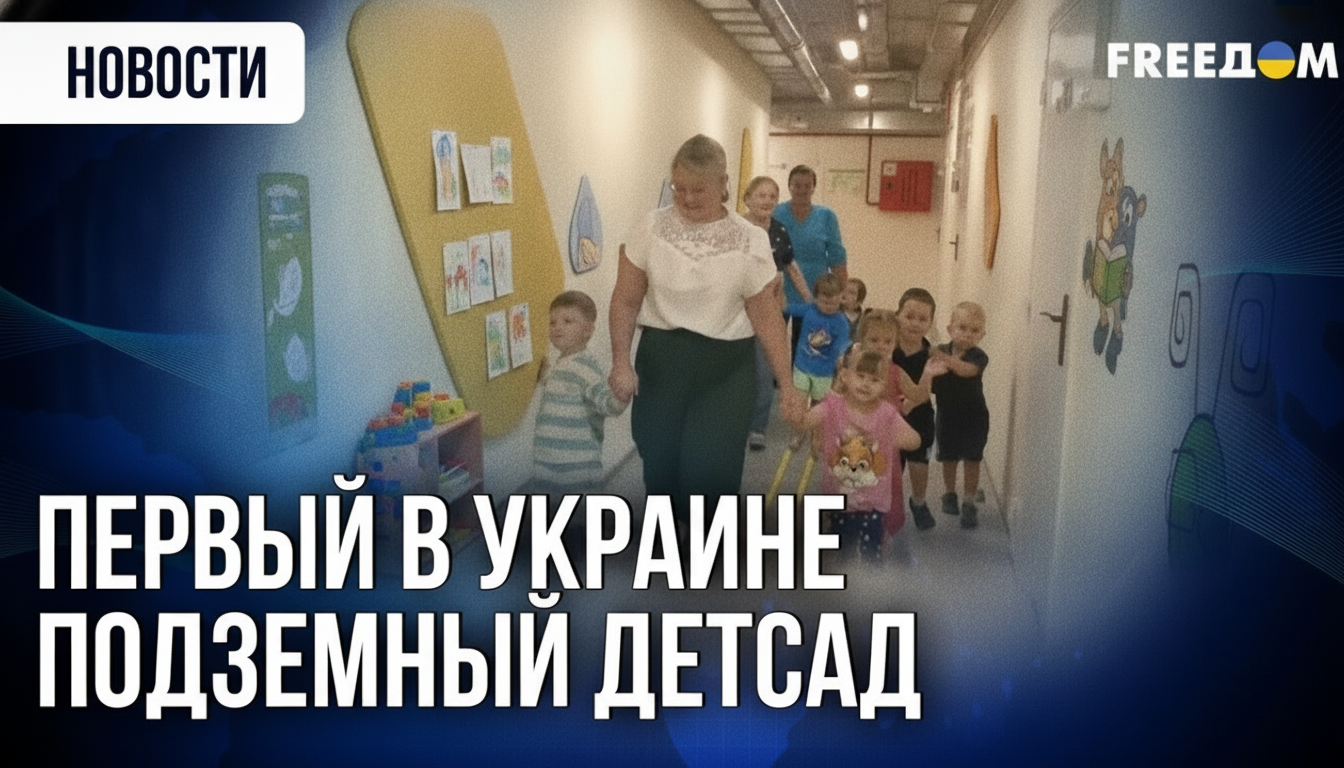
- Ukraine’s first underground kindergarten opens in Kharkiv, accommodating 260 children
- Ukraine's ports crippled by Russian strikes: 28 vessels hit, 21 killed
- 24 Children Rescued from Occupied Territories by Save Ukraine, Including Injured 13-Year-Old Anhelina
- Woman Faces Up to 7.5 Years in Prison After Attacking Children for Speaking Ukrainian in Poland
- One of the Most Recognizable Voices on Ukrainian Radio, Journalist Oleksandr, Has Passed Away