Research: The Two-Parent Privilege Does Not Protect Black Children from Racial Inequality.

According to Vox: For decades, our society has actively supported two-parent families, but today this topic has become particularly relevant. New books are being published, such as Get Married: Why Americans Must Defy the Elites, Forge Strong Families, and Save Civilization and The Two-Parent Privilege: How Americans Stopped Getting Married and Started Falling Behind. Social conservatives discuss initiatives to increase birth rates and promote nuclear families, while some right-wing representatives ponder the possibility of abolishing no-fault divorces.
Christina Cross's Research
The book by sociologist Christina Cross Inherited Inequality: Why Opportunity Gaps Persist Between Black and White Youth Raised in Two-Parent Families attempts to challenge these narratives and solutions. Cross studies the outcomes for children raised in two-parent African American families, a group that she believes often 'falls outside our collective imagination', despite the enormous emphasis on single-parent households.
Cross's work contradicts the idea that has been the foundation of public policy since the Moynihan Report in 1965 and through welfare reform, which suggests that if African American families simply marry and stay together, racial inequality will disappear. Her research shows that Black children raised in two-parent families still face significant challenges compared to white children from similar families.
Unknown Figures
The statistics are shocking. Black children in two-parent families were two to three times more likely to be suspended or expelled from school than white children with two parents. Currently, there is a 25 percent gap in the number of Black and white children from two-parent families who enter college. Regarding unemployment, young Black people from such families are three times more likely to be unemployed than their white peers.
Despite the fact that two-parent African American families account for half of all Black children in the U.S., these families have been very little studied by researchers: only 2 out of 163 studies on family structure published in leading journals between 2012 and 2022 analyzed their outcomes.
Discussion of the Issue
Your work suggests that promoting traditional two-parent families will not reduce racial inequality, yet you identify certain benefits for Black children raised in such families. Do you believe that encouraging marriage is still a political goal, even if it does not solve all issues?
Christina Cross: One of the reasons I focus on in my book is that we have centered our efforts on promoting marriage and two-parent families as solutions to racial inequality, but this intense focus on one solution limits our possibilities. My research shows that even among Black and white children in two-parent families, inequality remains high. So, the question we ought to be asking ourselves is whether this is the best use of our time, attention, and resources? Perhaps there are other strategies we could focus on, and my research supports that idea.
Many people may wonder why we should be against something that, although not a panacea, seems like aid and protection. What costs do you see in prioritizing two-parent families?
One of the costs I mention is that the focus on promoting two-parent families limits our ability to explore other strategies that may be more effective.
There are also real economic costs. Many may be surprised to learn that our federal government spends hundreds of millions of dollars each year promoting marriage and two-parent families. TANF, or Temporary Assistance for Needy Families, is our largest cash assistance program in the U.S., and this program has set four goals, three of which focus on promoting marriage and two-parent families. The government spends between $250 and $400 million annually on these efforts.
Right now, we are experiencing a period when federal funding for major welfare programs is being sharply reduced. In a situation of limited resources, we might be able to more effectively improve child outcomes and reduce the disparities between groups by providing direct cash assistance or support for child care or education.
In your book, you identified the Family Resource Perspective theory as the main framework used by social scientists and demographers to explain how family structure affects well-being. How does your research complicate this framework?
The Family Resource Perspective emphasizes that having two parents in a household leads to more resources, income, wealth, and time for children. But one of the things that often goes unnoticed, and that I emphasize in my research, is that these key resources are not evenly distributed.
This is particularly true for Black two-parent families. I found that Black two-parent families have about 60% of the income of white two-parent families and only 25% of their wealth. So, when we consider how important these resources are for improving children's outcomes, we must remember that if we do not have equal resources, we cannot expect equal outcomes either.
What is known about children who are raised in wealthier, divorced families?
This is the next stage of my research that I want to explore. Typically, we focus on average differences. That is, on average, two-parent families have more resources than single-parent families. But what if a child is raised in a high-income single-parent family or in a family with another adult who can assist in the upbringing? If resources truly determine the impact of family structure on children, having more resources and adults in the household may lead to better outcomes for children, even if they are not raised in a two-parent family.
What about in bad marriages? Is there a different level of harm or benefit for children compared to divorce or single-parent upbringing?
I have not focused on the quality of marriage, but we know that not all marriages are the same. It is very important to remember this since a child living in a high-stress and conflict household suffers negative consequences. This is not the subject of my research, but numerous studies confirm this.
You noted that the number of two-parent African American families increased by 15% over the last decade, while the number of Black families with a single mother decreased by approximately the same amount. What, in your opinion, is the cause of this?
Interestingly, when I was doing background research for my book, I was surprised to find that there are actually more two-parent African American families than are typically mentioned. I was struck by the fact that their numbers are increasing, and for every Black child living in a single-parent family, there is a Black child being raised in a two-parent family. However, our focus still remains on single-parent families. I am also curious to propose answers to this trend; that is the next step in my research.
You uncovered striking statistics: between 2012 and 2022, 163 articles were published on the impact of family structure in five leading family research journals, but only two of them examined the outcomes for Black young people in two-parent families. Why do you think this happened? Were you surprised by this?
Yes, I was very surprised. Of course, I knew that there were fewer studies on Black two-parent families because discussions usually focus on single-parent families. But that so few studies exist is just shocking. We have really only begun to explore what living with two parents means for Black children, and there is very little empirical data to support strong claims about the benefits of two-parent families in the context of racial inequality. That is why I decided to write this book.
I wanted to provide facts that would allow us to speak more accurately about the role of two-parent families in improving children's outcomes and addressing the issue of racial inequality. And, unfortunately, I found that this family structure cannot deliver what we expect.
Policy Recommendations
What policies or cultural shifts do you recommend for better supporting Black families and children?
I see these issues as two-sided. As you mentioned, part of this pertains to culture, and the other part relates to structure. When we talk about culture, it is important to remember the power of narrative, as it shapes our perception of problems and solutions. Supporting the idea that the main causes of African American difficulties are that they do not live in the 'correct' family leads to efforts being concentrated on promoting this family structure.
My work shows that even if African Americans raise their children in two-parent families, inequality remains high. Therefore, part of my hopes for this book is to change the narrative, to present evidence that we have not had access to due to the lack of research on Black two-parent families. This is the cultural aspect.
However, thinking about structure, it is important to know that one of the main reasons for the significant opportunity gaps between Black and white children is temporarily related to enormous differences in resources. Currently, many safety net social programs are being cut, which will likely further deepen these disparities that I observed in my work.
Recently, we have seen some effective strategies that could be implemented. One of them is an expanded child tax credit, which helped lift millions of children out of poverty during the pandemic. Another policy concerns 'marriage penalties,' where for some couples, paying taxes when they marry becomes more expensive than as individuals.
I know that many conservatives strive to eliminate these penalties.
Yes, that’s true. And this might be one of the strategies, but we should also utilize existing family resources. Right now, there is a significant focus on the nuclear family in social policy development, which even limits the ability of other family structures to support one another. African Americans are more likely to live in extended families, and some policies limit their ability to support each other in these formations. For example, in leave policies, people can take leave only to care for nuclear family members, such as a spouse or child, but not for parents or grandparents. When it comes to their care, they have to choose between losing income.
Last year, you became a target of criticism from Christopher Rufo, who called you a 'Critical Race Theory/DEI Scholar' and leveled plagiarism accusations. I know that researchers who have been accused of plagiarism have denied all of this. Harvard Sociology Department, the head of Plagiarism Today, and the American Sociological Association have rebutted these accusations. How did you perceive this attack on your work; were you surprised?
In such moments, even when I am under scrutiny, it really underscores the importance of my work. We know that Christopher Rufo is not an academic. While this situation has proven complex, it signals to me that I have been able to make a significant contribution to national discussions, and I hope to bring about a more productive discourse. I plan to continue this.
And, as you noted, I have received significant support for my work from both inside and outside the academic environment, which I consider very encouraging. I will continue in my work and hope that this book brings value to a broader audience.
Christina Cross's research opens new aspects in the discussion about racial inequality and the role of family structure in the lives of young people. Providing compelling data and examples, the author offers a new perspective on stereotypes and strategies proposed to address these complex issues. In a global context, this topic remains relevant and requires further research and discussion to create truly effective policies. Whether society will be ready to rethink the issue of family structure in the fight for equality remains to be seen.
Read also
- Three Ukrainians Without Documents Rescued from Occupied Territories Under Bring Kids Back UA Initiative
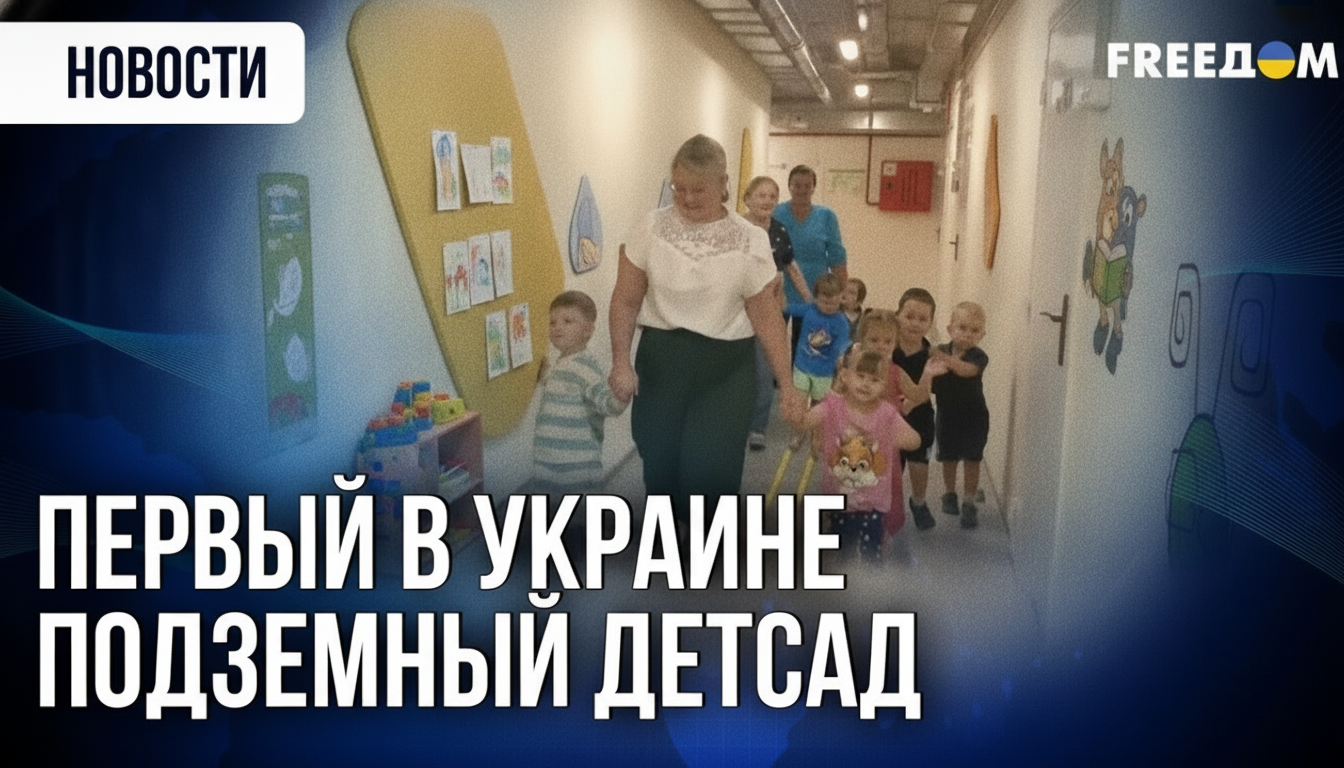
- Ukraine’s first underground kindergarten opens in Kharkiv, accommodating 260 children
- Ukraine's ports crippled by Russian strikes: 28 vessels hit, 21 killed
- 24 Children Rescued from Occupied Territories by Save Ukraine, Including Injured 13-Year-Old Anhelina
- Woman Faces Up to 7.5 Years in Prison After Attacking Children for Speaking Ukrainian in Poland
- One of the Most Recognizable Voices on Ukrainian Radio, Journalist Oleksandr, Has Passed Away