Amelia Bedelia: Why Children Still Adore the Eccentric Housekeeper from the Books.


According to Vox: A classic children’s book with an unexpected or perhaps better said - a crazy plot!
Amelia Bedelia - this book evoked so many questions in me, even as an adult, that I decided to devote some attention to this topic. I will return next week!
This story is about the most thoughtful moments of childhood, which acquire new meanings when we revisit them as adults. Who among us has not wondered how Garfield knows when Monday has come, or why Mickey is a mouse who owns a dog?
And how can you not look in surprise at the iconic stories about Amelia Bedelia, created from 1963 to 1988 by Peggy Parish, and later continued by her nephew Herman? These stories about Amelia Bedelia form a whole series of books that tell about the life of Amelia, who constantly creates chaos in her employers' home.
She always does the opposite - if asked to 'change the towels', she cuts them into pieces. If asked to check Mr. Rogers’ shirts, she decorates them in a checkered pattern. And if told to remove the linens from the bed, she tears them into ribbons.
Rereading these books, it’s hard not to notice how even ordinary tasks today look strange, after 40-60 years since they were written. For example, Mrs. Rogers asks Amelia Bedelia to 'clean the chicken', and she stuffs a live chicken into cotton pants. What was the point of that task? To marinate it? What a lost art of chicken arrangement!
She should follow others’ instructions, yet through her actions, she renders them nonsensical.
One perspective is that Amelia wants to carry out what she is instructed, but it’s just hard to understand what exactly. There is another school of thought that asserts that the chaos Amelia creates may be somewhat intentional.
It’s no wonder that some people see Amelia as a class fighter. Her actions against wealthy employers are rife with audacity. According to Sarah Blackwood of The New Yorker, she is Bartleby in an apron, 'a figure of rebellion against the work that women perform at home, against the work that low-class women do for upper-class women.'
It’s interesting to look at the tasks that Mrs. Rogers assigns to Amelia. In particular, the housemaid’s secret is cooking for the mistress, processing vegetables (she pairs them, of course), measuring cups of rice (she fills rice cups and then measures with a measuring tape), and, of course, arranging chicken (again: what?).
Mrs. Rogers, stepping out of a limousine in a fur coat, hopes to finish dinner preparations and, obviously, receive recognition from her husband for her splendid cooking. But her plans fall apart when Amelia not only excels in all the preparatory tasks but also prepares such delicious pies and other pastries that no one thinks about dinner (and no one can throw away such a masterpiece).
Amelia Bedelia proves to be more victorious, transforming routine, unnoticed, literally thankless work into a spectacular art form of removing labor, for which she is still paid.
I don’t think Peggy Parish was aware that she was creating Amelia Bedelia as a working-class revolutionary, however, in her character lies a certain cunning, despite her innocence (for instance, when she 'changes' towels, she cut a smiley pumpkin on one of them). I think my children, who are even further removed from the world where people hung curtains, sympathize with her because she is an adult doing silly things, a category of characters that children love (see also Peppa Pig’s Dad - Uncle Pig immediately, who reads maps upside down and once even accidentally fell out of an airplane).
Not only my children but also a hand reaches for the book about mid-20th-century working class generation which does things that are absolutely incomprehensible to them. By the 50th anniversary in 2012, the books about Amelia Bedelia sold over 35 million copies just in the USA. The character remains popular even today, as Herman Parish wrote an updated version in the 2010s and 2020s, where Amelia is no longer a maid but a child who understands roofs and seeks a new home with her family.
My children don’t like this version as much either, and that’s understandable. The essence is that Amelia Bedelia not only doesn’t understand phrases. It’s that she has to follow others’ instructions, and through her actions, sherenders them nonsensical.
For a child - a person who is constantly instructed on what to do in vague phrases, by people who seem to have all the power - what could be more enriching?
Read also
- Three Ukrainians Without Documents Rescued from Occupied Territories Under Bring Kids Back UA Initiative
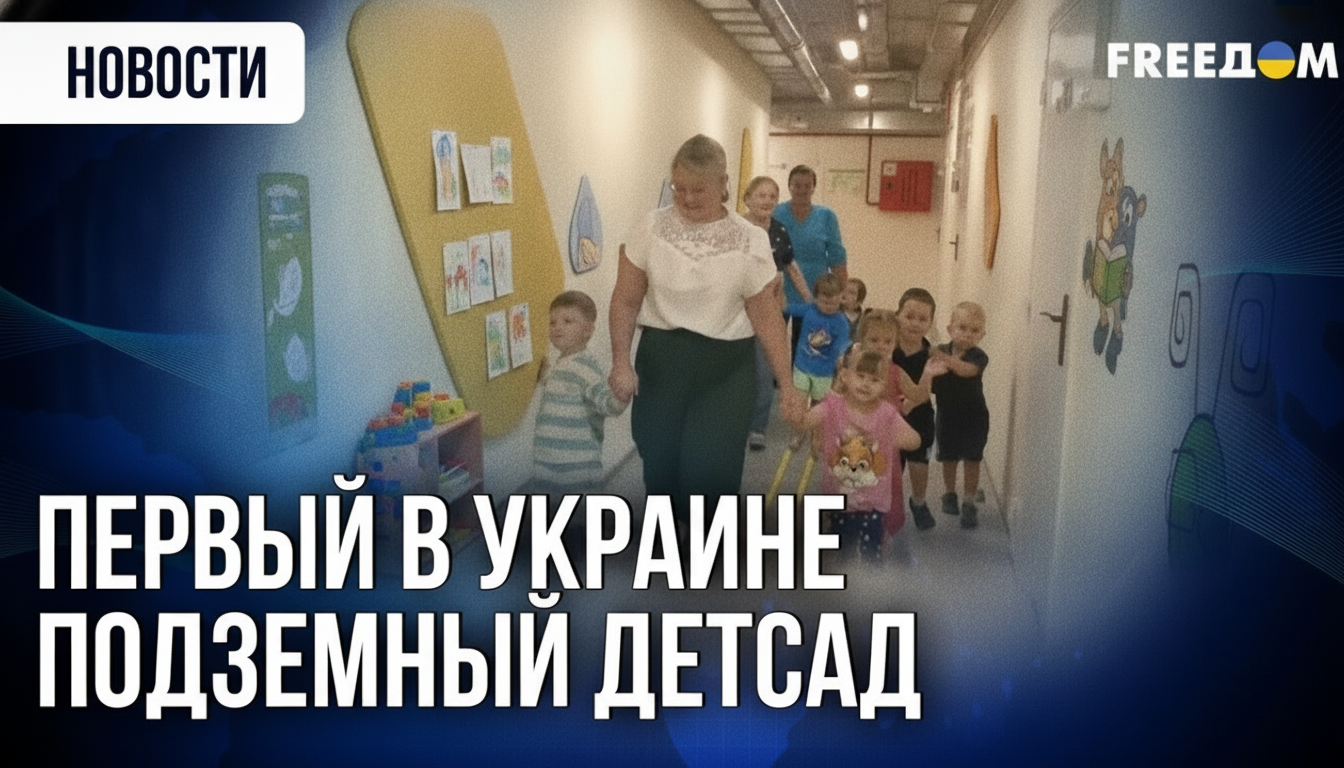
- Ukraine’s first underground kindergarten opens in Kharkiv, accommodating 260 children
- Ukraine's ports crippled by Russian strikes: 28 vessels hit, 21 killed
- 24 Children Rescued from Occupied Territories by Save Ukraine, Including Injured 13-Year-Old Anhelina
- Woman Faces Up to 7.5 Years in Prison After Attacking Children for Speaking Ukrainian in Poland
- One of the Most Recognizable Voices on Ukrainian Radio, Journalist Oleksandr, Has Passed Away