











The Mysterious Word 'Piets': What it Really Means.
According to ТСН: With the active development of social networks and the growing interest in one's roots, dialects are becoming increasingly popular among Ukrainians. This opens new horizons for understanding the Ukrainian language and expanding the vocabulary. One such word that often raises questions is the mysterious 'piets'.
What the word 'piets' means
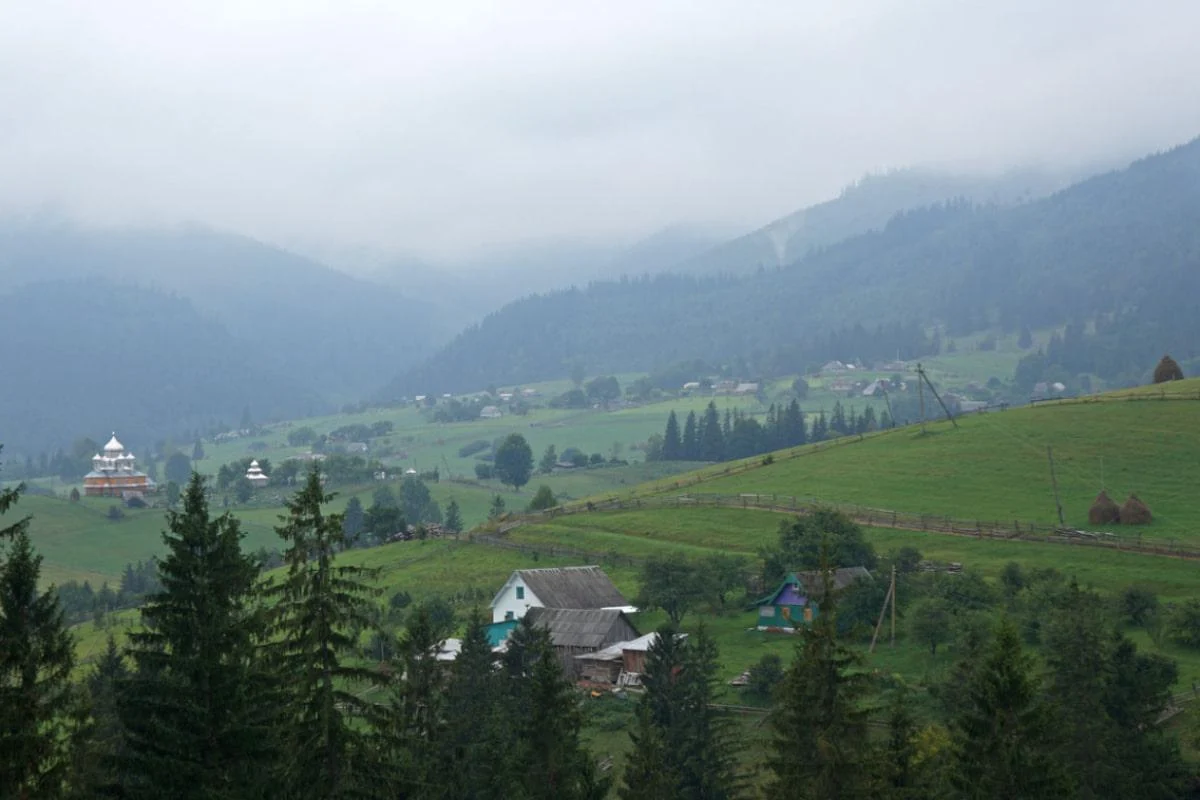
For many Ukrainians, this word remains relatively unknown, as it is usually used in the west of Ukraine, particularly in Galicia. However, the item it denotes is well-known to all – it's a simple stove.
According to the 'Dictionary of the Ukrainian Language' in 20 volumes, 'piets' is defined as a stove – a structure used for heating a room or cooking food. In many Ukrainian dictionaries, this word is recorded as a colloquial synonym and dialectism, which possesses a norm.
The etymology of the word indicates its western origin: it is borrowed from the Polish language (piec), where it has the same meaning.
The resource 'Lviv Lexicon' clarifies that in Lviv, 'piets' most often referred to a large tiled stove intended for heating rooms. Such authentic stoves can still be found in many historic buildings in the historical center of Lviv.
The word is so firmly rooted in the language that it has become the basis for a number of stable expressions and idioms that may confuse an untrained listener:
'Forgot to light the piets' – it means that the hostess forgot to heat the stove.
'Give to the piets' – means to severely beat someone. This expression comes from bath culture, where hot stones (piets) are suddenly splashed with water to create steam.
'Hold on to the piets' – this is a wish to be strong, resilient, or to act according to one's conscience.
Famous Ukrainian writer Ivan Franko also used derivatives of this word. In his works, one can find the term 'pietsukh', which denotes a lazy person – someone who loves to lie on a warm stove.
It is worth emphasizing that in different regions of Ukraine, there are specific dialectics that may be unclear to residents of other provinces. One such word is 'kalabanchik' – in some regions, this refers to a small container or lunchbox for food taken with you to work or school.
Ukrainians also use other alternative names: in Donetsk, popular words include 'tormozok' (food for work, especially in the mines) and 'marmid' (a container for lunch).
Studying and using dialects not only enriches the Ukrainian language but also helps preserve cultural heritage. Dialects reflect the uniqueness of each region and the living tradition of communication, making speech more expressive and interesting.
Read also
- Memorial Plaque Unveiled at ONTU for Fallen Ukrainian Hero Oleksiy Vadatursky
- New Parking Signs in Ukraine: Which Vehicles Are Banned from Stopping in Designated Zones
- Men Over 50 Excluded from Combat Units: Decision Reached by Military Recruitment Centers
- Blago Unveils 'Blahozavryk' Mascot at Forum, Donating 100% of Profits to Superhumans
- Ukrainian Military Recruitment Personnel Now Authorized to Use Force and Weapons: What You Need to Know
- Heating Bills for January to Be Revised in Kyiv: Over 720 Million UAH in Compensation Announced